If this message is not displayed correctly click here |
Issue 789 - June 8th - 12th 2026 - Expressly created for 3704 wine lovers,
professionals and opinion leaders from all over the world | |
|
|
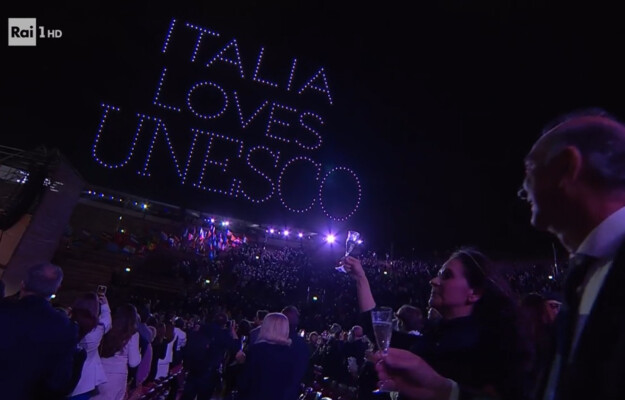
| | | When Italy embraces its Italian identity to present itself to the world by celebrating its “great beauty” through culture, of which opera and Neapolitan song, along with Italian cuisine and the wine that accompanies it, are symbols, Italy wins. This was the case, accompanied by the music of Giuseppe Verdi’s “La Traviata”, with the show “Campioni del Mondo – Italia Loves Unesco”, broadcast on Rai 1 and worldwide from the Arena di Verona, organized by the Ministries of Culture, Agriculture, Tourism, Foreign Affairs, and Sport and Youth, to launch the UNESCO nomination of the classic Neapolitan song. In the glasses of over 10,000 spectators, Conegliano Valdobbiadene Prosecco Superiore DOCG. | |
|
| | The now well-known difficulties facing exports, for obvious reasons, apply as much to Italy as to the major wine-producing countries, which are generally weathering the storm worse than Italy; there are some positive signs, especially in terms of value (thanks in particular to the renewed vigor of sparkling wines), in the domestic market, led by large-scale retail, while the on-premises sector is certainly not booming, penalized also by the growing gap between purchasing power (declining) and consumer prices (rising), but where wine remains a star on the tables of wine bars and high-end restaurants (focus on data from Nomisma Wine Monitor and TradeLab). This is the summary of the Federvini Assembly, aptly titled “Wines, spirits and vinegars put to the test by the new (dis)order of the world”, held in Rome in recent days. “2025 has put us to the test with unprecedented intensity”, stated Federvini President Giacomo Ponti, “but our companies have demonstrated an extraordinary ability to adapt, and they have understood one thing: uncertainty is the new normal. We look to the future with confidence: we embody a strategic value - economic, cultural, and identity-based - that no tariff can undermine”. Diversifying markets, said Foreign Minister Antonio Tajani and, speaking via video link from South Africa, Agriculture Minister Francesco Lollobrigida and ITA-Italian Trade Agency President Matteo Zoppas, is imperative. “The situation is as complicated as we partly expected. The difficulties, even in the US”, emphasized Albiera Antinori, head of one of the most important Italian wine producers, Marchesi Antinori, and of the Federvini Wine Group, “are not solely attributable to tariffs, because the downward trend is widespread. The tariffs arrived at a time when the dollar was weak, when the U.S. distribution chain was beginning to creak, with the three-tier system driving up the final price at every step, and as Americans’ purchasing power declines. This is not an easy time, not even for American wine itself, but the US remains a key market for Italian fine wines. Agreements with India, Mercosur, and, in general, all other opportunities to diversify markets are important, but they are long-term in nature, and in any case, the US market is irreplaceable”. | |
|
| | In Italy, “Piwi wines” are still a niche market, but given their sustainability and disease resistance, some see them as a key part of the future, to the point that there is a desire to overcome the current restrictions that prevent their use in Italian designations (even though European regulations would allow it). “If a designation fears that introducing a small percentage of a resistant grape variety, say 10-15%, might distort the wine’s style, then perhaps its identity isn’t as solid as we think. We are more attached to and loyal to the grape variety than to the territory, and this makes it harder to accept change”. These words, spoken during an open debate, come from Nicola Biasi, an oenologist and one of Italy’s leading experts on the Piwi world, who for years has been leading the “Resistenti Nicola Biasi” network of wineries, composed of producers from various regions who have focused specifically on Piwi varieties. | |
|
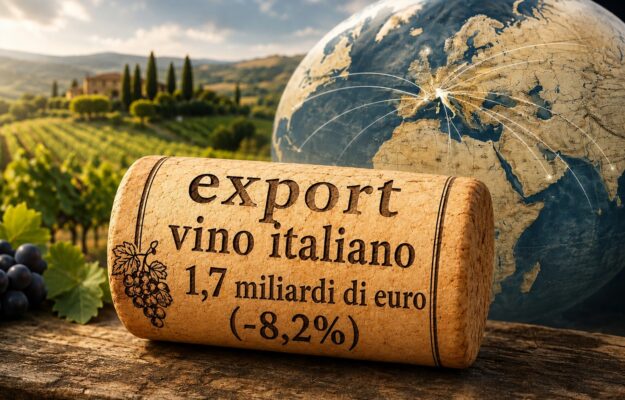
| | | The outlook remains negative, but there are small signs of recovery for Italian wine exports in 2026. According to Istat data analyzed by WineNews, in the first quarter of 2026, Italian wine exports totaled 1.7 billion euros, down 8.2% from the same period in 2025, but showing a clear improvement compared to January 2026 (-18.7%) and the first two months of the year (-13.3%). Volumes stood at 472.8 million hectoliters (-4% compared to the first quarter of 2025), down slightly from the February 2026 figure (-3.2%). Performance in the top market, the United States, was significant: here, exports reached €407.9 million in the first quarter of 2026. And while the 12-month comparison remains decidedly negative (-20.5%), it should not be forgotten that the first two “reports” of the year cited, respectively, -35.2% in January and -27.5% in February. The main markets for Italian wine (detailed data below) all showed an improvement in performance during the January-March 2026 quarter compared to the figures seen in the first two months. Starting with Germany, at 263.3 million euros (-4.5%, compared to -9.1% in February 2026), the leading market on the Old Continent. Among the markets showing growth compared to a year ago are Canada (+0.5%), France (+4.3%), Russia (+46.5%), and China (+17%). | |
|
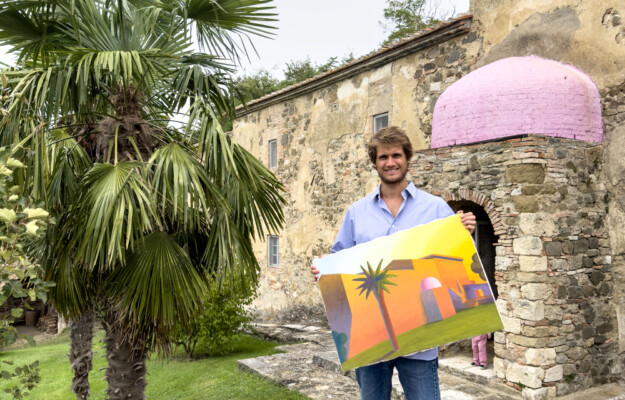
| | | It was a story of art and friendship, that between Andrea Franchetti, a producer of the highest caliber in the Val d’Orcia with Tenuta di Trinoro, and Etna, with Passopisciaro, who passed away in 2021, and Salvo, born Salvatore Mangione, a Sicilian artist (who left us in 2015) whose works are now among the most sought-after in the art world. He also designed the labels for Tenuta di Trinoro, now led by Andrea’s son, Benjamin Franchetti, who, together with the Salvo Archive, recently celebrated this friendship with an exhibition marking the “debut” of Tenuta di Trinoro 2023. | |
|
| | “Not too much, not too little”, or “in medio stat virtus”. Alain Ducasse is crystal clear when discussing a timely topic like wine consumption, at a time when the industry is grappling with declining consumption, younger generations drawn to other beverages, and a greater focus on health. But it is not just a matter of moderation and awareness, and the call from the world’s most-starred chef from Monaco is precisely not to reduce the issue to a simple dichotomy, because “the point is not to impose wine, nor to suffer its decline, but to learn to serve it better, at the right temperature, in the right amount, alongside smart alternatives when the customer desires them”. This is one of the reflections he shared on stage at Identità Milano 2026 (of which WineNews was a media partner). | |
|
| | From 100 magnums from Napa’s top wineries to Michelin-starred dinners, to dream wines, and in memory of Michel Rolland: these are some of the lots featured in the “Auction Napa Valley” 2026, the charity auction held by Sotheby’s at Francis Ford Coppola’s Inglenook Estate, attended by figures such as Stephanie Rolland, daughter of the great French winemaker, and Piero Antinori and Renzo Cotarella, at the helm of Marchesi Antinori, the only Italian company with a winery in Napa, Stag’s Leap Wine Cellars, which raised $6 million. | |
|
|
|