If this message is not displayed correctly click here |
Issue 795 - July 20th - 24th 2026 - Expressly created for 3696 wine lovers,
professionals and opinion leaders from all over the world | |
|
|
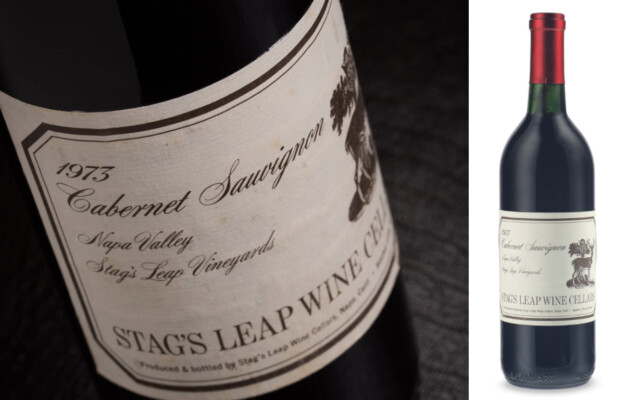
| | | There are wines that leave their mark on history. Among them is the legendary 1973 Cabernet Sauvignon produced by Stag’s Leap Wine Cellars, an iconic California winery founded by the renowned Warren Winiarski and, since 2023, wholly owned by Antinori, one of the most prominent names in Italian and global wine. This wine made headlines in 1976 when it won the famous “Judgment of Paris”. And a single bottle of that legendary 1973 vintage set another record: it was sold at an online auction by Christie’s for a whopping $22,500, more than five times the minimum estimate of $4,000... | |
|
| | The agri-food sector is a fundamental resource for the Italian economy, as evidenced by figures that project, for example, exports of 59.3 billion euros in 2025 (+5.1%). But Italian wine and food are also a global mainstay, playing an increasingly prominent role and growing at a faster pace than the competition. According to Nomisma, over the past 10 years, global exports of food and beverage products (excluding agricultural products and tobacco derivatives) have grown by 76%, exceeding $1,430 billion. In the global ranking, Italy holds the No. 6 position, with a 4.7% share, corresponding to just over $67 billion. At the top of the list, with over $100 billion in food exports, are the Netherlands and Germany, followed by the United States ($90 billion), Brazil ($82 billion), and France ($71 billion). There are flagship products that serve as “drivers” for Italy’s food sector: Italian wine accounted for 23% of global wine exports in 2025 (up from 18.7% in 2015, according to Nomisma based on Trade Map data); pasta’s share fell from 30.4% (2015) to 27.6% (2025), olive oil remained stable (21.2% in 2025), while interest in dairy products rose (from 9.3% to 13.5%). Alongside these leading sectors, there are others where the share of exports is lower but has been growing over the past decade. This is the case for baked goods, for which Italy’s share rose from 6.4% in 2015 to 8.2% in 2025; chocolate (from 6.2% to 7.2%); canned vegetables (from 6% to 7%); and coffee (from 4.6% to 5.2%). Collectively, these eight products/sectors account for 63% of Italy’s food and beverage exports, thus highlighting a high degree of diversification in the range of exported products. Among the world’s leading exporters, Italy’s growth was surpassed by only one country, Poland, which, over the same period, increased the value of its food exports by 169%, rising from 18 to nearly 49 billion dollars. Looking at specific products, Nomisma further notes that while Italy’s leadership in pasta exports is undisputed, it is “under attack” from emerging competitors such as South Korea, whose export share has risen from less than 4% to 10% over the past 10 years, and Turkey (which now stands at 5.2%). | |
|
| | The narrative that Gen Z’s (ages 18 to 28) alcohol consumption is the most “moderate” needs to be reevaluated: they are creating new patterns, but the data show that their consumption of alcoholic beverages, in general, is virtually identical to that of the rest of society. In contrast, alcohol consumption among Boomers (ages 61 and older) has been declining for several years. It may be they, not Generation Z, who deserve the title of “the generation of moderation”. Currently, Millennials (the 29- to 44-year-old age group) have the highest alcohol consumption of all generations, with an average of 81%; Gen X (ages 45 to 60) ranks second, with an average of 77%. These findings come from the semi-annual Bevtrac survey by IWSR, the global leader in alcoholic beverage market analysis. | |
|
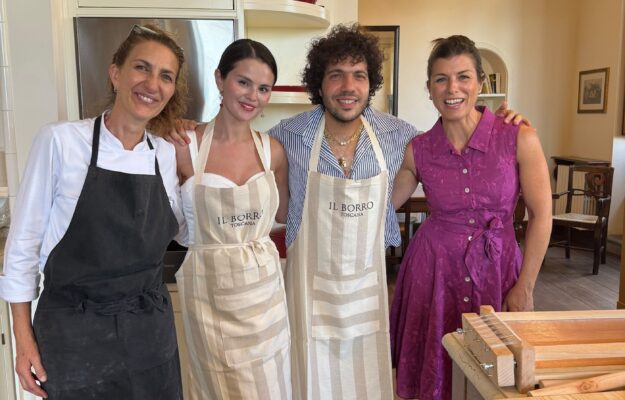
| | | A birthday that brought together all the best and most beautiful aspects of Italy, from lunches at traditional trattorias to gourmet sandwiches, tiramisu, and a cooking class at Il Borro, the Ferragamo family’s estate in Valdarno: the famous American singer and actress Selena Gomez chose Italy to celebrate her 34th birthday with her husband Benny Blanco, enjoying a few days of vacation and posting a photo on her Instagram profile (which boasts a record 404 million followers) of herself blowing out a candle in Florence. After stopping in Bologna for lunch at the historic “Trattoria della Santa”, Selena Gomez was spotted in Tuscany. There, between a stop at the gourmet sandwich shop “Ino” and dinner at the “Vini e Vecchi Sapori” tavern in Florence, the couple took part in a cooking class featuring iconic Italian dishes, such as eggplant parmigiana and fresh pasta with cream sauce, at the Il Borro estate, one of Tuscany’s most beautiful and exclusive locations. The couple was welcomed by Salvatore and Vittoria Ferragamo, who shared some moments of their stay with their guests. To cap off the trip, Gomez posted a photo in which, instead of the traditional birthday cake, she chose a tiramisu with a view of the iconic Ponte Vecchio to blow out her birthday candle. | |
|
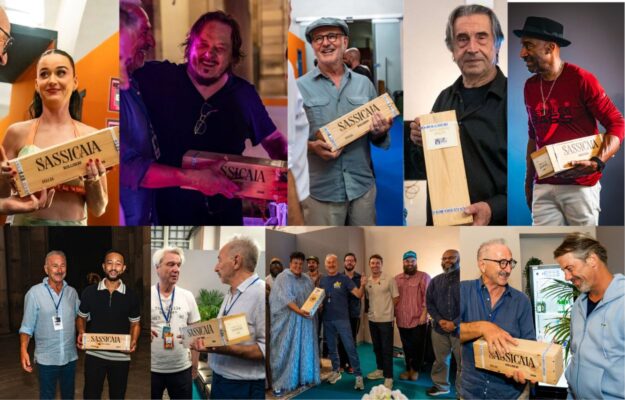
| | | If it’s true that a bottle of great wine can serve as an ambassador for a territory, there’s nothing better than placing it in the hands of those who speak a universal language like that of music. A successful pairing at the “Lucca Summer Festival” featured Sassicaia from Tenuta San Guido, the legendary wine of Bolgheri and one of Italy’s most sought-after wines, gifted to superstars such as Katy Perry, Marcus Miller, John Legend, David Byrne, Jay Kay, and the Alabama Shakes, among others. | |
|
| | This confirms that the combination of wine and culture, along with the mix of venues where history and conviviality come alive, is a winning formula for engaging the general public. It also confirms that a widespread, traveling wine “festival” in Italy, backed by a strong brand like Veronafiere/Vinitaly and aimed at consumers, is now a successful and exportable format. This is demonstrated by “Vinitaly and the City - Calabria in Wine” No. 3, held at the Sibari Archaeological Park in Calabria (with “Pinot Grigio DOC delle Venezie” as the “Official Wine”), featuring, among others, the Minister of Culture, Alessandro Giuli, and the Minister of Agriculture, Francesco Lollobrigida, but above all, 30,000 visitors (compared to 25,000 in 2025) and 110 companies, including wine and spirits producers, as well as 12 collective exhibits. And with a “sequel” scheduled for August 8 and 9 on the Reggio Calabria boardwalk. | |
|
| | Amid the vineyards just a stone’s throw from the sea in Menfi, or overlooking Selinunte, Europe’s largest archaeological park, spanning 5,700 hectares cultivated by 2,000 winegrowers: these are the figures for Settesoli, one of the most important wineries in Sicily and Italy, which has begun the 2026 harvest with the early-ripening varieties (Pinot Grigio, Sauvignon Blanc, Moscato, and Chardonnay), before moving on to the red varieties (Merlot and Alicante Bouschet). Once again, Sicily is “kicking off” the long harvest season (with some bunches already in the cellar). | |
|
|
|