If this message is not displayed correctly click here |
Issue 768 - January 12th - 16th 2026 - Expressly created for 3683 wine lovers,
professionals and opinion leaders from all over the world | |
|
|
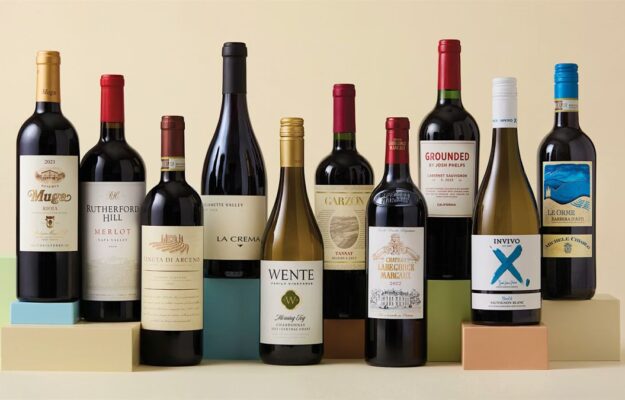
| | | The Chianti Classico 2022 from the historic Tenuta di Arceno estate (93/100 and $30), now owned by Jackson Family Wines, No. 3, and Michele Chiarlo’s Barbera d’Asti Le Orme 2023 (90/100, $19), which has brought Barbera to the top of the world, from the vineyards with the works of art of the Art Park La Court in Monferrato, No. 10: these are the best Italian wines in terms of high quality-price ratio in the “Top 10 Values” 2025 by “Wine Spectator”, with Bodegas Muga’s Rioja Reserva 2021 (92/100, $39) at No. 1, and Bodega Garzón’s Tannat Uruguay Reserva 2023 from Alejandro Bulgheroni’s “galaxy” at No. 6 (91/100, $22). | |
|
| | Bring together leading Italian companies, whose brands have driven the country’s appellations, in a communication project that scientifically explains the value of moderate wine consumption for staying healthy. This is the “counteroffensive” to a communication strategy that, in recent years, has often been based on the “demonization” of wine, not distinguishing it from spirits in campaigns on alcohol abuse, neglecting what it represents on our tables and in our culture, where it is synonymous with socializing and sharing, and generating uncertainty among consumers and operators, launched by Signorvino. At a time of declining consumption, consumer uncertainty, a more restrictive regulatory climate, and public communication with an alarmist and simplified approach, invites us to transform fear into culture, investing in the promotion of wine not in a commercial sense, but in a bio-evolutionary and cultural sense, focusing on the Mediterranean lifestyle, where moderate and conscious consumption has a specific place, at meals, and on education, rather than prohibitions. This was discussed in recent days in front of an audience of producers, stakeholders, and journalists, including WineNews, and moderated by Benedetta Rinaldi, host of “Elisir” on Rai 3, at Oniverse, just outside Verona, the Veronesi family group, which includes Oniwines, with wineries in various regions, and Signorvino, led by Federico Veronesi, for whom it was “a starting point for a necessary journey given the situation”, he said. The call for proactivity came from Oniverse president Sandro Veronesi himself, so that companies can shape changes in socio-cultural habits and not just adapt to them: “A counteroffensive is needed against misinformation about wine, investing in the communication of scientific studies on the benefits of moderate consumption”, such as those by Giovanni Scapagnini, an authority in the field of nutritional geroscience, according to whom “wine promotes sociability, limits stress, and reduces the risk of disease and aging”. It is no easy task for Veronesi to bring companies together, given the fragmentation of the sector in Italy and the often conflicting ideas. But there is no other way. | |
|
| | A decline in consumption that is set to continue, but also qualitative growth in low-alcohol and non-alcoholic wines. And then there is the umpteenth rise in wine auctions, new varieties of resistant grapes ready to become mainstream, and the push by Millennials towards wine tourism with its new trends. These are the five predictions for 2026 from the “crystal ball” of Robb Report, one of the world's most famous luxury and lifestyle publishing brands. It starts with some bad, but not unexpected, news: “with the decline in consumption, the wine world will continue to struggle in terms of sales and relevance. However, younger people are leading the way, “preferring affordable bottles whose authenticity and sustainability they appreciate”. The chapter on No-Lo wines is now a fixture when discussing the future of the sector (read more). | |
|
| | | A trend that continues to go negative. Italian wine exports worldwide are still slowing down, as shown by Istat data analyzed by WineNews and updated in October 2025. Compared to the first 10 months of 2024, this represents a decrease of -2.7% in value (from -2.2% in September) to €6.5 billion, and -1.4% in volume (from -0.9% in September) to 1.76 billion liters. This overall figure is greatly affected by the trend in shipments to the United States, which are influenced by tariffs, but also by changing and declining consumption: from January to October 2025, Italian wine exports to the United States were worth €1.5 billion, down 5.6% on the same period in 2024. Volumes also fell in the 10 months (-3.2%) to 288.4 million liters, a gap that has widened since the last survey. However, the United States remains the leading trading partner for Italian wine, ahead of Germany, which remains in positive territory, despite a decline in September: €946.9 million, up 1.36% from January to October 2025 on an annual basis. The United Kingdom (the leading trading partner for European agriculture) also climbs onto the podium, continuing to slow down its purchases of Italian wine compared to last year: -3%, for a value of €686.7 million (see below for more details). | |
|
| | | It is a market worth just $30.5 million and therefore still marginal, yet it has matured considerably in recent years. But India is also the most populous country in the world, and ISWR says that global consumption will exceed $520 million by 2028. Italy is the fourth largest supplier, but it is growing faster than any other country, so much so that the first stop of the 2026 “Vinitaly Roadshow”, organized by Veronafiere in collaboration with ITA - Italian Trade Agency, is taking place until January 18 in India, where 30 Italian companies have flown. | |
|
| | While 2026 will be the first year that Italian cuisine is recognized as a UNESCO World Heritage, some of its greatest chefs believe that the future will also require an even greater focus on communicating the combination of wine, food, and territory, because wine is the most faithful companion at our table. So much so that Michelin, in 2026, will make its debut in the world of wine with its own “Wine Selection”, in which it will award 1 to 3 “Michelin Grapes” to wineries, in the wake of the stars. Returning to the plate, Michelin has lined up the “7 Big Food Trends of 2026” (in depth), with a philosophy that unites them: eat well to feel good, which means restoring food to its most genuine function, that of a natural source of well-being. | |
|
| | Prosecco DOC, which has been the driving force behind Italian wine for years, ended 2025 on a positive note despite the difficult global context. Thus, confirming its status as the world’s most famous Italian sparkling wine, according to data from the Consortium, it closed the year with 667 million bottles produced (+1.1% on 2024), of which 60.3 million were rosé (accounting for 10% of the category), worth €3.6 billion, of which over 82% was exported to 164 countries, with the US as the leading market (23.8% of exports, up 8%), followed by the UK (+1.1%) and France (+21.1%). | |
|
|
|