If this message is not displayed correctly click here |
Issue 767 - January 5th - 9th 2026 - Expressly created for 3700 wine lovers,
professionals and opinion leaders from all over the world | |
|
|
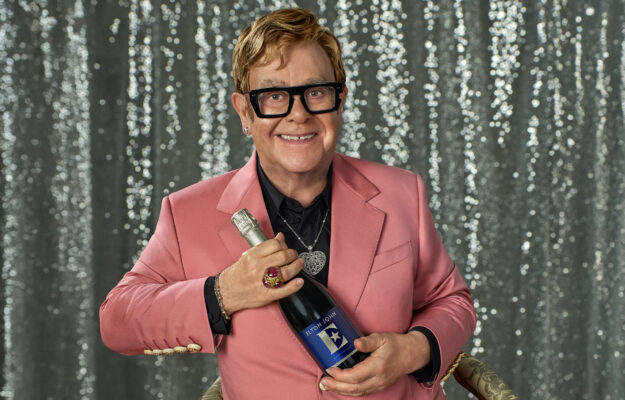
| | | Sir Elton John, one of the true living legends of world music, makes his debut in the world of wine, by jumping on the bandwagon of the latest trend: alcohol-free wines. He is launching a Blanc de Blancs sparkling wine, which marks the debut of the “Elton John Zero” brand. A unique wine, made exclusively from Chardonnay grapes “in the coldest areas of northern Italy”, according to the dedicated website, it is not a dealcoholized wine, but a product in which the fermentation phase is managed using special bacteria instead of traditional yeasts, “which develop refined aromas similar to those of wine, without producing alcohol”. The project partner is the London-based company Benchmark Drinks. | |
|
| | After a final quarter with some positive signs, 2025 closed on a negative note overall, but with hopes for a recovery in 2026 for the global secondary market for fine wines, monitored by Liv-Ex and analyzed by WineNews. The Liv-Ex 100, the platform’s summary index (which includes Bartolo Mascarello’s Barolo 2019, Bruno Giacosa’s Barolo Falletto Vigna Le Rocche Riserva 2017, Giacomo Conterno’s Barolo Monfortino Riserva 2014 and 2015, Biondi-Santi’s Brunello di Montalcino Riserva 2016, Gaia’s Barbaresco 2019, Tenuta San Guido’s Sassicaia 2019, 2020, and 2021, Marchesi Antinori’s Solaia 2021 and Tignanello 2020 and 2021, Ornellaia 2021 and Masseto 2020 and 2021 from Gruppo Frescobaldi, and 100% Sangiovese Toscana IGT 2019 from Soldera Case Basse), closed last year with a decline of -2.5%. (among the top 10 wines in terms of performance are Soldera Case Basse’s 100% Sangiovese Toscana IGT 2019 and Tenuta dell’Ornellaia’s Ornellaia 2021, up around +11% over 12 months). So did the Liv-Ex 1000, the platform’s broadest index, which closed at -4.5%, with negative performances from many sub-indices, particularly Champagne 50 (-4.2%), Burgundy 150 (-4.8%) and Bordeaux 500 (-6.7%). With the exception of the Rhone 100 (which closed 2025 up +0.2% on 2024), the best, or the “least worst”, was once again the Italy 100: -1.7% over 12 months for the index that includes Bartolo Mascarello’s Barolo from all vintages from 2011 to 2020. Italy 100: -1.7% over 12 months for the index that includes Bartolo Mascarello’s Barolo from all vintages from 2011 to 2020, as well as Gaja’s Barbaresco, Giacomo Conterno’s Barolo Monfortino Riserva, vintages 2001, 2002, 2004, 2005, 2006, 2008, 2010, 2013, 2014, and 2015, Bruno Giacosa’s Barolo Le Rocche del Falletto Riserva 2000, 2001, 2004, 2007, 2008, 2011, 2012, 2014, 2016, and 2017, and, again, all vintages from 2012 to 2021 of Sassicaia from Tenuta San Guido, Solaia and Tignanello from Marchesi Antinori, and Ornellaia and Masseto from the Frescobaldi Group, as well as 100% Sangiovese Toscana IGT from Soldera Case Basse from the 2009 to 2019 vintages (excluding 2010). The wine with the best revaluation, both in the Italy 100 and the Liv-Ex 1000, was Bruno Giacosa’s 2014 Barolo Le Rocche del Falletto Riserva, up 62.5% in the last year. | |
|
| | From an icon of Franciacorta, Monte Rossa, to a symbol of South Tyrol, Terlano; from a Barolo legend such as Giacomo Conterno to a piece of Amarone della Valpolicella history, Bertani (by Angelini Wines & Estates); from a pearl of Barbaresco, Paitin, to one of Sardinia’s standard-bearers, Siddura; from a sacred monster made in Bolgheri, Masseto, to one of the most famous wineries in Maremma, Fattoria Le Pupille; from a symbol of Montalcino, Poggio di Sotto (ColleMassari Group) to a great name from Etna, Pietradolce: these are the territories and wineries that produced the 10 “Wines of the Year 2025” selected by the UK magazine “Decanter” (in more details). | |
|
| | | It is a fact that there is a lot of wine (or too much, according to many) in Italian cellars. Of course, last year’s increase may also be linked to a series of harvests that varied in terms of volume (2023 was very poor, 2024 was more generous, and 2025 was even more abundant), but the fact that sales and consumption are sluggish is something that many are experiencing firsthand. Looking at the different regions, the increase in stocks seems to affect everyone, from the most prestigious appellations to the more niche ones, larger production areas, but also regions with lower production potential. This is evident from a comparison of the data for the various appellations in “Cantina Italia”, updated to November 30, 2025 (53.4 million hectoliters, +8.6% on the same period in 2024), which WineNews has compared with the data for November 30, 2024. As of November 30, 2025, therefore, all of the top 10 largest appellations in terms of wine “stocks” saw their inventories increase (data in detail) over the last year: Prosecco DOC (+2.8%), Puglia IGP (-0.7%), down, IGP Toscana (+18.1%), DOC Delle Venezie (+20.5%), IGP Terre Siciliane (+31.3%), IGP Veneto (+13.5%), Rubicone (+1%), Chianti (+19.9%), Doc Sicilia (+9.5%), and Salento Igp (+4.5%). | |
|
| | | A land also tells its story through what it cooks, cultivates, and shares at the table: it is from this perspective that one of the most authentic interpretations of “Steve McCurry - Umbria” emerges, staged until May 3, 2026, at the Complesso Museale di San Francesco, bringing the gaze of one of the world’s most famous and beloved photographers to Montefalco. A visual journey in which Umbria is savored with the eyes and even taste becomes emotion. | |
|
| | In first place is La Gerla’s Brunello di Montalcino La Pieve 2021, a leading winery run by agronomist and CEO Alberto Passeri. In second place is Monteraponi’s Chianti Classico Gran Selezione Radda Bragantino 2021, the jewel of Gallo Nero, and in third place is Barolo Bricco Boschis Vigna San Giuseppe 2019 from Cavallotto, an excellence from Langhe. This is the podium of the “Top 100 Wines of 2025” by Kerin O’Keefe, critic and former Italian editor of the influential US magazine “Wine Enthusiast.” Rounding out the top 10, in order, are Baricci’s Brunello di Montalcino Montosoli 2021, Gianni Brunelli’s Brunello di Montalcino 2021, Barbaresco Riserva Montefico 2021 by Produttori del Barbaresco, Barolo Acclivi 2021 by G.B. Burlotto, Brunello di Montalcino Riserva Diecianni 2016 by Le Chiuse, Barolo Villero 2021 by Brovia, and Brunello di Montalcino 2021 by Conti Costanti. | |
|
| | According to Ismea’s “Bio in Cifre” 2025 report, organic agricultural land in Italy exceeds 2.5 million hectares (+2.4% in 2024 compared to 2023), representing 20.2% of the national UAA (Utilized Agricultural Area, ed.). The area under organic vineyards remains virtually stable at 132,441 hectares (-0.4%), of which 104,767 hectares have been converted. Wine grapes cover 128,929 hectares (102,134 hectares converted), with the rest being table grapes. In terms of the percentage of organic land out of the total, vines account for 21%. | |
|
|
|