If this message is not displayed correctly click here |
Issue 783 - April 27th - May 1st 2026 - Expressly created for 3716 wine lovers,
professionals and opinion leaders from all over the world | |
|
|
| | | Wine tourism generates 3.1 billion euros for Italian wineries and is now a strategic asset for economic growth. In Sicily, according to a Nomisma Wine Monitor analysis for UniCredit, presented in Palermo at the launch of “Sicilia en Primeur” 2026 by Assovini Sicilia (May 11-15 in the Sicilian capital), it has a much more international character, with the typical profile of the wine tourist arriving on the island being predominantly foreign - specifically American, German, and British - around 50 years old and not necessarily a wine expert, which is not a problem but rather an opportunity to turn them into ambassadors for Sicilian wine. | |
|
| | In 2025, the European Union reached a record high for agri-food exports, totaling 238.4 billion euros, a 1.2% increase over 2024. At the same time, however, agri-food imports from third countries also reached a record high of 188.6 billion euros, an increase of 9%. These figures demonstrate just how much the EU is a global powerhouse in food production and exports, but at the same time, a market increasingly “under attack” from foreign products. This is precisely why it is essential to ensure European food sovereignty and food safety by demanding reciprocal rules with third countries, to protect both consumers in terms of quality and health, and producers from unfair competition from others who follow less rigorous rules and production systems, taking Italy as a model of excellence not only in terms of quality but also in food safety and the system of controls. Furthermore, by investing even more in animal welfare, paying close attention to the issue of increasingly pressing diseases (from swine fever to dermatitis, and beyond), consumer health, and farmers’ profitability.This is the message launched today by EU Health Commissioner Olivér Várhelyi (in more detail) during his visit to the Ministry of Agriculture in Rome, where he was hosted by Minister Francesco Lollobrigida. When asked by WineNews about the Commissioner’s position on the issue of “health warnings” on wine and spirits labels, which was recently discussed again in the EU Parliament, he said: “I do not support alarmist labels, and today I reiterated that we will work together to ensure maximum transparency. But we will never accept labels that are misleading”. This view is also shared by Coldiretti, with whom Commissioner Várhelyi met, receiving a petition with one million signatures calling for improvements in transparency and food safety. “Help us in the fight for transparency”, said Coldiretti President Ettore Prandini to the EU Commissioner for Health, “for a sector that represents Italy’s history, a history spanning millennia, namely the wine sector. We cannot accept the demonization of wine: it is history and quality, and it is our land”. | |
|
| | A partnership centered on Sangiovese, between Emilia-Romagna and Tuscany. Caviro, Italy’s largest wine cooperative, is strengthening its structure by announcing “the addition of Vecchia Cantina di Montepulciano to its membership base”, with a collaboration project aimed at creating new synergies for Leonardo da Vinci S.p.A., a company of the Caviro Group (specifically, Vecchia Cantina will oversee the entire production process - from grape delivery to bottling - for wines sourced from the vineyards of the former Cantine Leonardo members, while the finished product will be marketed partly through Vecchia Cantina’s direct channels and partly through the Leonardo da Vinci Spa network, with which Vecchia Cantina has established a significant partnership to relaunch the project for the Vinci region). | |
|
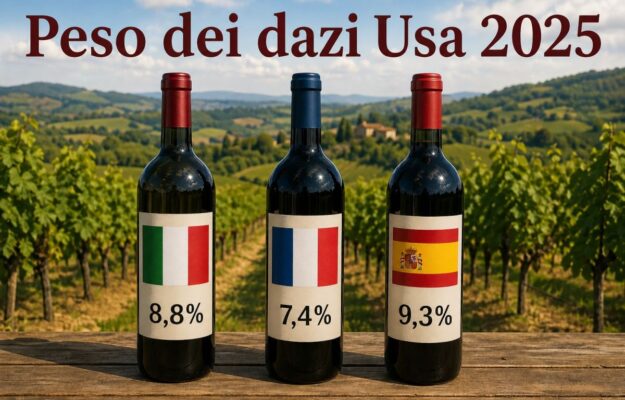
| | | 2025 was a year of significant changes for the Italian wine industry. The factor that had the greatest impact, while the downward trend in consumption cannot be overlooked, was the imposition of tariffs by the US, a measure implemented by President Donald Trump that has “slowed down” the pace of exports. But how much of an impact did the tariffs actually have? An analysis by the American Association of Wine Economists (AAWE), based on data from the U.S. Bureau of the Census - U.S. Trade Online, and reported by WineNews, clarifies this aspect by calculating an “average”. As for Italian wine, the effective tariff rate for 2025, depending on the wine imported, is 8.8%, a figure derived from the average of the various rates imposed throughout 2025. Thus, starting from that “standard” rate of approximately 6.3 cents per liter for most still wines, applicable from January through April 4, 2025, to which was then added a 10% tariff from April 5 through August 7 and a 15% tariff from August 8 onward. This trend had a significant impact, considering that, in 2025, Italian wine exports to the U.S., according to Istat data analyzed by WineNews, reached 1.75 billion euros in value (-9.1% compared to 2024). The impact was lower (7.4%) for France, while for Spain it was 9.3%. | |
|
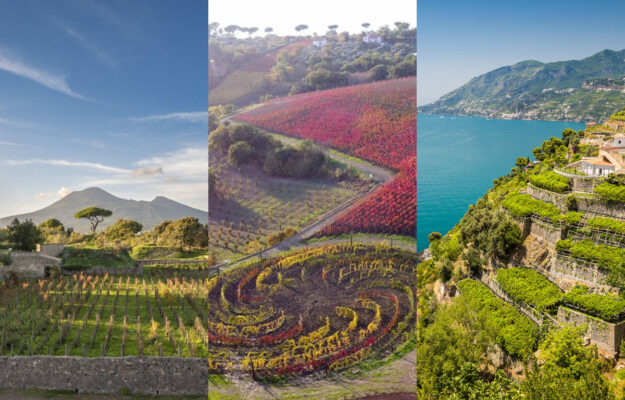
| | | The Campania of wine is a treasure trove of winemaking history and attractions such as the Royal Palace of Caserta, venue for “Campania Stories” 2026 and the presentation of new vintages, with the best tastings from WineNews among 270 wines from 82 wineries (Ciro Picariello, Colli di Lapio, Di Meo, Donnachiara, Luigi Tecce, Pietracupa, Tenuta Cavalier Pepe, Tenute Capaldo - Feudi di San Gregorio, Villa Matilde Avallone, Antonio Mazzella, Marisa Cuomo, Montevetrano, San Salvatore 1988, and more). | |
|
| | In a climate where the crisis has not spared the wine industry, investments by entrepreneurs in the sector represent a boost of optimism for a future driven by quality. This is the case with Herita Marzotto Wine Estates - one of Italy’s leading groups, with a total turnover of 246.6 million euros in 2025 - which has invested in the expansion of Kettmeir, the historic winery in Caldaro (Bolzano), officially inaugurated in recent days and aimed at improving the quality of its Metodo Classico, as well as enhancing sustainability and hospitality. An investment, according to the leadership of the group based in Fossalta di Portogruaro (Venice), that amounts to over 10 million euros. | |
|
| | “QuattroMani” marks a new chapter in the prestigious collaboration between Pasqua Vini and Washington State winemaker Charles Smith, resulting in an unusual wine: a “multivintage” Pinot Noir made from grapes grown and harvested in Valpolicella, vinified according to Smith’s vision, in a bottle that unites the “Old and New Worlds” of wine. “A wine that encapsulates the convergence of visions, styles, and terroirs, writing a new chapter in the history of the Veronese winery, which has become the exclusive global distributor of the House of Smith brands since 2025”. | |
|
|
|