If this message is not displayed correctly click here |
Issue 779 - March 30th - April 3rd 2026 - Expressly created for 3713 wine lovers,
professionals and opinion leaders from all over the world | |
|
|
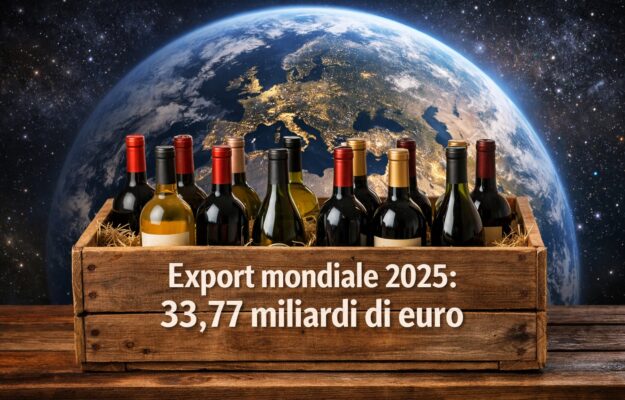
| | | It comes as no surprise that 2025 was a difficult year for the wine industry compared to 2024. Shedding light on the international wine market for 2025 is the report by Del Rey Analyst of Wine Market (AWM), analyzed by WineNews, which indicates a decrease of -6.3% in value and -4.7% in volume compared to the previous year. According to official customs data analyzed by Del Rey AWM, this translated into a reduction of €2.26 billion, with total export revenue of €33.77 billion in 2025; in terms of volume, global shipments decreased by 4.65 million hectoliters, to 94.76 million hectoliters. | |
|
| | At a historic moment when wine is facing one of its most critical phases, the solution to overcoming this may lie in defending its strengths while simultaneously embracing change. And this may also mean producing less, because it is the market, with its demand, that inevitably dictates the pace. But we must also continue to invest in that “Italian Way” of mindful drinking – reaffirming that wine consumed in moderation and with meals is not harmful to health – and of pairing with cuisine, without ever forgetting the opportunities the world continues to offer, by sowing, for example, the first seeds in those markets that are currently small and marginal in terms of numbers, but which may sit at the table of the “big players” in the future. These are some of the key messages from the panel discussion “Beyond the Borders of Wine: Strategies for Promoting Italian Food and Win”, organized by the ICE-Italian Trade Agency, which brought together leading figures from the sector at the “Forum in Masseria” No. 6, an economic and political conference organized by Bruno Vespa and Comin & Partners at Masseria Li Reni in Manduria, the wine-producing heartland of the doyen of Italian journalism. The event brought together, among others, ICE President Matteo Zoppas; producers and presidents of industry organizations Albiera Antinori (Marchesi Antinori and Gruppo Vini Federvini), Lamberto Frescobaldi (Frescobaldi and Unione Italiana Vini - UIV), Federico Bricolo (President of Veronafiere),Andrea Cipolloni (CEO of Eataly). For Lamberto Frescobaldi, UIV president and producer at the helm of the Frescobaldi Group,the solution is clear: “We need to produce less; the cellars are full, and this is a very sore point. We must face at least a couple of years where it is necessary to reduce yields per hectar”. For Albiera Antinori, president of the Federvini Wine Group and of Marchesi Antinori, the most admired Italian wine brand in the world, it is important to highlight that uniquely Italian trait of moderate wine consumption, as highlighted by a Federvini study: “Consumption paired with food brings benefits, and at a time when Italian cuisine is becoming a UNESCO World Heritage, and wine is also part of that cuisine, it must be used as a communication opportunity and a marketing lever” (read more). | |
|
| | Franciacorta is one of the most significant and innovative areas in Italian sparkling wine production; it was the first Italian wine produced exclusively using the bottle-fermentation method to obtain, in 1995, DOCG status, and with a Consortium, founded in 1990 and currently chaired by Emanuele Rabotti, which brings together over 120 wineries to form one of the greatest assets of Italian winemaking. Innovation is one of the key themes of the “Research & Development Activity Report” No. 4, which offers an in-depth analysis of the 2025 vintage and the main research activities shaping the future of its viticulture. Climate, vineyard protection, sustainability, and microvinification: these are the main topics currently under consideration by the Franciacorta appellation, analyzed in the 2026 “Research & Development Activity Report”. | |
|
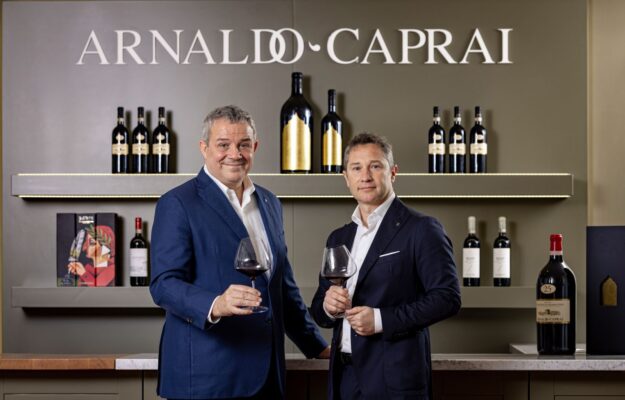
| | | Confidence in the future of Italian wine, despite the decidedly challenging times, and in its most prestigious and premium-luxury brands, but also a new model of business collaboration that brings together the vision of those who created and developed them, not only in terms of “legacy”, but also, and above all, in terms of resources, expertise, “know-ho”, and synergies, to grow together. This is how Alberto Lusini, CEO of Angelini Wines & Estates, and Marco Caprai, CEO and President of Arnaldo Caprai, describe to WineNews (in more detail, in the news published in recent days), the new partnership (with Angelini having acquired a majority stake in Arnaldo Caprai, and Marco Caprai, who founded and led the winery, increasing his stake from 25.5% to 35% and continuing to lead it). “This isn’t a classic acquisition, but a modern consolidation project”, Alberto Lusini emphasizes to WineNews, “where Angelini recognizes the value of the work Marco Caprai has done over the years for Montefalco, for Umbria, and for Italian wine”. “For us, it’s a great opportunity; we’re entering a new dimension”, comments Marco Caprai, “in a partnership model that allows entrepreneurs to lead their own businesses, with partners who support and assist them, to fully realize the value they bring to the compan”. | |
|
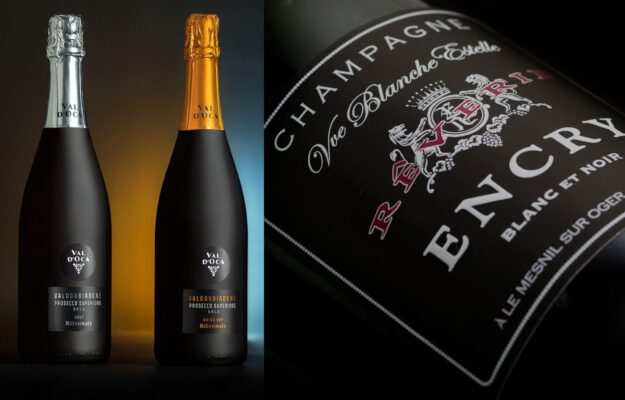
| | | While Italy has long been one of the top five markets for French Champagne, in recent years France has become the third-largest market for the quintessentially Italian Prosecco. This exchange sometimes even leads to unique partnerships, such as the one between Val d’Oca, one of the most prominent names in the “Prosecco” world and in the Conegliano Valdobbiadene Prosecco Superiore DOCG, and Champagne Encry, the only French champagne house owned by Italians, Enrico Baldin and Nadia Nicoli. Starting April 1, Val d’Oca will be the new exclusive distributor for Champagne Encry in Italy. | |
|
| | In times of declining consumption, in a year when even some global giants of the Metodo Classico sparkling wine sector have experienced a downturn, substantial stability is something worth toasting to. This is exactly what Trentodoc’s “mountain bubbles” have achieved, with figures from the Trentodoc Institute Observatory confirming the sector’s resilience: in 2025, revenue stands at 180 million euros, in line with the previous year, with 12.2 million bottles sold. “This is a positive result, in a very difficult period for many reasons, across all sectors, and with wine in general seeing declines in consumption worldwide”, Stefano Fambri, president of the Trentodoc Institute (and director of Nosio, the commercial division of the Mezzacorona Group, ed.), told WineNews. | |
|
| | While the future of wine depends in part on the ability to adapt to change, achieving this requires preserving one’s identity. An innovative initiative has emerged from one of the most important wine regions, Piedmont: for the first time, dealcoholization is being applied to native single-varietal wines, with the aim of producing wines with zero alcohol content. This is the “Devin0” project, a collaboration between Italy and France dedicated to the development and adoption of dealcoholization technologies through integrated research, experimentation, and training activities. | |
|
|
|