If this message is not displayed correctly click here |
Issue 763 - December 8th - 12th 2025 - Expressly created for 3700 wine lovers,
professionals and opinion leaders from all over the world | |
|
|
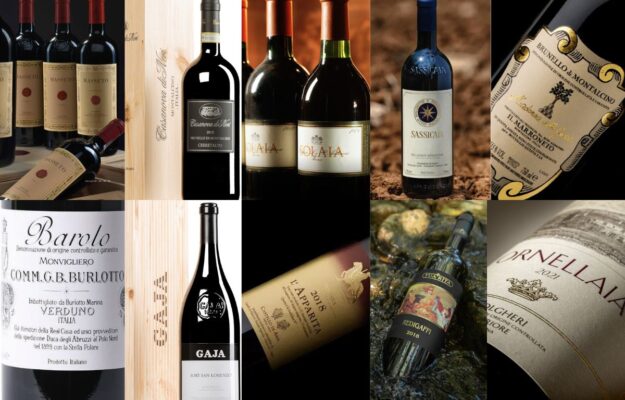
| | | A great classic among collectors and auction houses such as Masseto, a Bolgheri gem now owned by the Frescobaldi Group, Brunello di Montalcino Cerretalto by Casanova di Neri, one of the most celebrated and internationally awarded wineries in the region, symbol of “pure Sangiovese”, and Solaia by Marchesi Antinori, one of the most celebrated Supertuscans in the world: these are the three wines at the top of Wine-Lister’s 2025 “Best Italian Wines” ranking. Also in the “top 10” are wines from Tenuta San Guido, Il Marroneto, G. B. Burlotto, Gaja, Castello Di Ama, Tua Rita, and Ornellaia. | |
|
| | One of the legends of Bordeaux, Cheval Blanc, ranks No. 1 overall, Tenuta San Guido, icon of Bolgheri with its Sassicaia, climbs to No. 2, and Domaine Laflaive, one of Burgundy’s brightest jewels, ranks No. 3: here is the podium of the Liv-Ex Power 100, the ranking of the “strongest” wines on the fine wine market monitored by the London-based platform Liv-Ex, analyzed by WineNews, and compiled by looking at year-on-year price performance, trading performance on Liv-ex (by value and volume), the number of wines and vintages traded, and the average price of a brand’s wines. Burgundy remains the most represented region with 29 brands, ahead of Bordeaux with 27 and Italy with 20. This is mainly due to Supertuscan and Langhe and Barolo producers, partly reflecting a slight “cooling” in demand for other important appellations, such as Brunello di Montalcino and Chianti Classico, at the top of the range, due to difficulties in the US market, Liv-Ex points out. And so, looking at Italian wines, we find an anthological name from the Langhe such as Gaja, at No. 11, followed, among the Italians, by the two Bolgheri jewels now owned by the Frescobaldi Group, Ornellaia (No. 17) and Masseto (No. 21). Position no. 23 goes to Giacomo Conterno, home of the legendary Barolo Monfortino, while No. 27 is occupied by the only Italian producer not from Tuscany or Piedmont, Quintarelli, icon of Amarone della Valpolicella, from Veneto. Position No. 31 goes to one of the great classics from Antinori, Tignanello, followed at No. 41 by another jewel from the historic Florentine family, Solaia, with the two “separated” by one of the references from the Langhe, Comm. G.B. Burlotto, at No. 37. Another top name from Tuscany, Montevertine, ranks 53rd, while Piedmont returns at 65th with Produttori del Barbaresco and 66th with Bruno Giacosa. Position no. 72 goes to the leading exponent of Brunello di Montalcino, Biondi Santi, now owned by the French Descours family (Epi Group) and run by Giampiero Bertolini, ahead of another icon of the region, Il Marroneto, at no. 79. Then we return to the Langhe, with the historic Giuseppe Rinaldi at No. 81 and Roagna at No. 87, and then back to Montalcino, with Soldera Case Basse at No. 91 and Valdicava at No. 92, and finally back to Barolo, with Vietti and Bartolo Mascarello at No. 94 and 95. | |
|
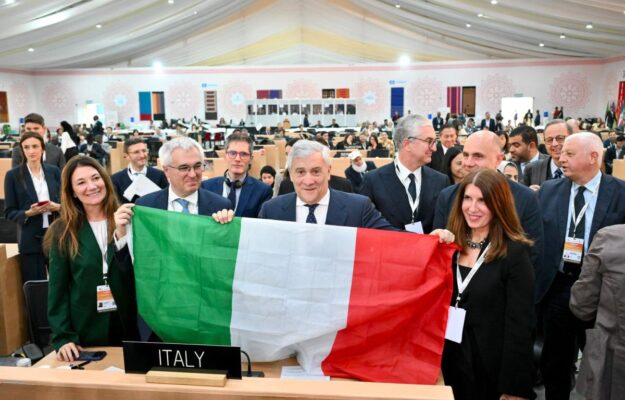
| | “I want to share some news with you that fills us with pride. UNESCO has recognized Italian cooking as Intangible Cultural Heritage. We are the first in the world to obtain this recognition, which honors who we are, which honors our identity. Because for us Italians, cooking is not just food, it is not just a collection of recipes. It is much more: it is culture, tradition, work, wealth. Our cuisine comes from agricultural supply chains that combine quality and sustainability. It preserves a thousand-year-old heritage that has been handed down from generation to generation”, said Prime Minister Giorgia Meloni. Minister of Agriculture Francesco Lollobrigida said: “Italy has won, and this is a celebration that belongs to everyone because it speaks of our roots, our creativity, and our ability to transform tradition into universal value”. | |
|
| | | “Dear friends of WineNews, yes, Italian cooking is now a UNESCO Intangible Cultural Heritage. I am here at the Red Fort, where the proclamation has just been voted on, and as president of the committee promoting this candidacy, I can tell you that today is a great day for Italian cooking. Long live Italian cuisine, long live Italy”. Thus, from New Delhi, Maddalena Fossati Dondero, director of the historic magazine “La Cucina Italiana”, which in 2023 began the process that led to the recognition, together with the Accademia della Cucina Italiana and the Fondazione Casa Artusi. In recent days, this process culminated in the long-awaited “award” for the dossier coordinated by Pier Luigi Petrillo, holder of the UNESCO chair at the Unitelma Sapienza University of Rome, and Massimo Montanari, one of the leading experts in food history, and for the candidacy promoted by the Italian government through the Ministry of Agriculture and the Ministry of Culture. The comments were all positive, of course, from the promoters, politicians (including Ministers Antonio Tajani, Alessandro Giuli, and Daniela Santanchè), cultural and agricultural organizations (from Slow Food to Coldiretti, from Confagricoltura to Cia-Agricoltori Italiani, from Confcooperative and Legacoop Agroalimentare to Nomisma). | |
|
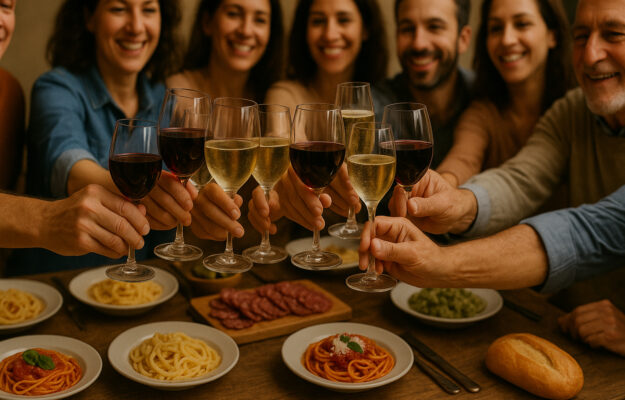
| | | Even wine, historically the best companion to food, at least in the Italian vision of conviviality, of which it is an integral part, cannot help but be satisfied and welcome the recognition of Italian cooking as Intangible Cultural Heritage of Humanity as a positive and encouraging sign for a new start in a complex phase such as the one the sector is currently experiencing. This is evident from the words of the leaders (in more detail) of Unione Italiana Vini - Uiv, Federvini, Città del Vino, Vinitaly, Fivi, Federdoc, and Assoenologi. | |
|
| | Enthusiasm, beauty, experimentation, hope for stability, resilience, accessibility, and more: these are the keywords for Italian wine in 2026. At least according to the leaders of the 24 wineries of the Consorzio Italia del Vino, interviewed by WineNews, which, in recent days, at a meeting in Rome, reconfirmed Roberta Corrà (already at the helm of Giv) as president, with an aggregate turnover of €1.5 billion and 15% of national exports. In 2025, the market slowed down, explains the Consortium: “It is not a collapse, but a constant erosion linked to both the cost of living and a cultural change.” Looking ahead to 2026, stabilizing inflation and the disposal of stocks in some markets open up a more favorable scenario: “it is plausible to expect a moderate rebound in demand, driven by whites and sparkling wines” ... | |
|
| | The Consortium for the Protection of Bolgheri DOC and Bolgheri Sassicaia, which safeguards one of the most successful and valuable Italian wine regions, continues to be led by women, with Cinzia Merli, head of the renowned Le Macchiole winery, elected as president. The new president will be supported by Priscilla Incisa della Rocchetta, from the historic Tenuta San Guido, and Giacomo Satta from the Michele Satta winery, one of the most prominent in the area, as vice presidents. “It is a great honor and responsibility. Bolgheri is a unique area”, comments Cinzia Merli. | |
|
|
|