If this message is not displayed correctly click here |
Issue 770 - January 26th - 30th 2026 - Expressly created for 3679 wine lovers,
professionals and opinion leaders from all over the world | |
|
|
| | | Italian wine in 2026 begins under the sign of acquisitions: the Lee family, based in London, of Korean origin and with other businesses around the world, but passionate about wine and with a long-standing bond with Tuscany, has purchased Tenuta Cerbaia, a small but historic Brunello di Montalcino winery, opening a new chapter for the future of one of the most Italian prestigious wines and its territory, whose vineyards, in the last years, have been among those with the highest number of acquisitions (reaching a price of 1 million euros per hectare). Founded in 1978 by politician Fabio Pellegrini, with its 12 hectares (5 of which are vineyards), it will now be led by Agostino Lippi. | |
|
| | The Mole Antonelliana, the (former) Fiat, Juventus, Nutella, hazelnuts, Fassona beef, white truffle and, of course, great wine. These are just some of the many symbols that evoke Piedmont. Piedmont, even before the individual food and wine denominations of this region, rich in history, the “cradle” of unified Italy and one of the engines of the country economic boom. A name, Piedmont, which may soon be allowed on labels, for those who wish, alongside the great and better-known (and more highly quoted) to the smaller or lesser-known ones. This is because practically all Piedmontese wine consortia have embraced the proposal launched in 2025 by “Grandi Langhe e il Piemonte del Vino” and now, a year later, the goal is near. If bureaucratic steps and regulation updates proceed swiftly, the 2026 harvest could already see the first wines carrying “Extended Geographical Mention” on the label (with the idea that for some wines released several years after the harvest, a “retroactive” rule may apply, ed). One more tool to enhance Piedmont wine heritage, which every year generates well over 1 billion euros in exports (553 million euros in the first 6 months of 2025, according to Istat data), nearly 15% of the national total, with a 2025 production of over 2.1 million hectoliters, 93% of which are denomination wines (60 PDO wines), worth 1.1 billion euros at production value, grown on more than 43,792 hectares of vineyards. This is one of the topics of “Grandi Langhe e il Piemonte del Vino” 2026, the edition No. 10 of the professional showcase created by the Barolo, Barbaresco, Alba, Langhe and Dogliani Consortium and the Roero Consortium, now also supported by the Piemonte Land of Wine Consortium, become a true “en primeur” for the entire Piedmont wine region. Which, in fact, works to promote itself united, starting from the labels of its excellences, as the heads of Piemonte Land (Francesco Monchiero), the Consortium of Barolo and Barbaresco (Sergio Germano), the Consortium of Barbera d’Asti e Vini del Monferrato (Filippo Mobrici) and the Councilor for Agriculture of the Piedmont Region, Paolo Bongioanni, told WineNews (in depth). | |
|
| | That the wine market in the U.S. is not in its most flourishing moment is an indisputable fact. The general figures say so, such as those from Silicon Valley Bank, and looking at Italy, the most up-to-date Istat data also confirms it, showing a drop in exports (1.5 billion euros for Italian wine exports in the first 10 months of 2025, down -5.6% compared to 2024, according to WineNews analysis). The 15% tariffs on all European goods obviously also have an impact, the euro/dollar exchange rate is significant, which currently sees the euro stronger than the U.S. dollar, and changes in consumption, health and more also have an impact. But the crisis doesn’t appear as severe from the U.S. perspective as it is often portrayed. At least according to leading industry representatives interviewed by WineNews at “Grandi Langhe e il Piemonte del Vino”, in Turin (in more detail). | |
|
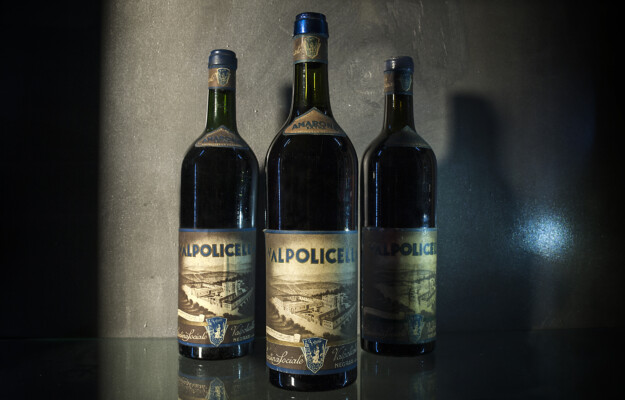
| | | Not the result of a fortunate mistake, a barrel of “Recioto scapà” (escaped, gone out of control), as it has been said until today, but a wine arisen from a precise idea, born in the 1920s, for the valorization of the typicity of the wine prince of Valpolicella, which has as “protagonists” Pieralvise Serego Alighieri (grandfather of the homonymous Pieralvise who today heads Possessioni Serego Alighieri), Giambattista Rizzardi, and not only: a research, which WineNews is able to anticipate, while “Amarone Opera Prima” is underway (30 January - 1 February, in Verona) which rewrites the history of Amarone. Proof of the former “autonomous” and “sought-after” production of Amarone are not only the stocks from vintages prior to 1936, but, above all, the numerous historical documents collected by Marina Valenti, former head of external relations for Cantina Valpolicella Negrar. These documents were studied, reorganized, described, and valorized with the scientific support of Francesco E. Benatti, head of the Historical Archives of the Unione Italiana Vini (Uiv), who collaborates in the protection of the archival heritage of the Paolo Desana DOC Documentation Center in Casale Monferrato (see interview for more details). | |
|
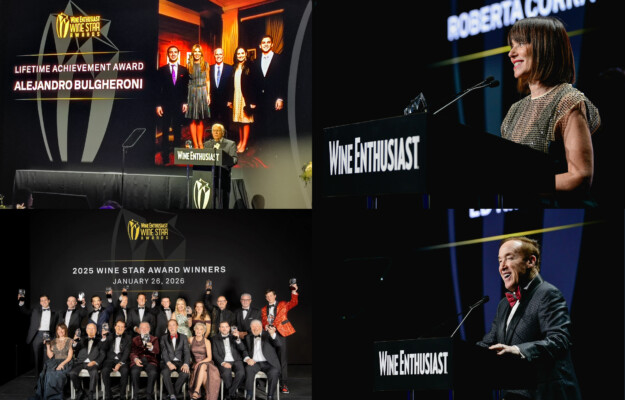
| | | Among a thousand difficulties, a message of optimism for wine in the US: Adam Strum, president and CEO of Wine Enthusiast Companies, delivered it at the 2025 “Wine Star Awards” gala in New York. On stage there were also Roberta Corrà, head of Gruppo Italiano Vini - Giv and US wine merchant Frederick Wildman & Sons, “Person of the Year”, and Alejandro Bulgheroni, the Argentine entrepreneur who, in Italy alone, owns the Meraviglia and Le Colonne estates in Bolgheri, Dievole in Chianti Classico, Poggio Landi and Podere Brizio in Montalcino, with the “Lifetime Achievement Award”. | |
|
| | Not only the vineyard which returns to be once again cultivated among the remains of the ancient city buried by the eruption of Vesuvius in 79 A.D.: in Pompeii, a truly unique winery in the world is being established thanks to the important “eno-archaeology” project arisen from a public-private partnership between the Archaeological Park and Feudi di San Gregorio (Gruppo Tenute Capaldo), will be presented on February 3rd at the Ministry of Agriculture in Rome, with the Minister of Agriculture Francesco Lollobrigida and the Undersecretary for Culture Gianmarco Mazzi, Attilio Scienza, Gabriel Zuchtriegel (Archaeological Park of Pompeii) and Antonio Capaldo (Feudi di San Gregorio), moderated by Daniela Scrobogna, president of the Scientific Committee of the Fis Advanced Training School (Fondazione Italiana Sommelier) and Bibenda. | |
|
| | Pinot Grigio Collio 2024 by Schiopetto, one of the leading names in the wine scene of Friuli-Venezia Giulia and among the great white wines of Collio, is ranked No. 1 in “Top 100 Value Wines 2025 - Everyday Gems” by James Suckling. Italy is represented by five wines: there are also Soave Classico La Rocca 2023 by Pieropan (No. 5), Verdicchio dei Castelli di Jesi Classico San Paolo Riserva 2021 by Pievalta (No. 9), Sauvignon Blanc Collio Cicinis 2024 by Attems (No. 24) and Sauvignon Alto Adige Oberkerschbaum Riserva 2022 by J. Hofstätter (No. 35). | |
|
|
|