If this message is not displayed correctly click here |
Issue 775 - March 2nd - 6th 2026 - Expressly created for 3704 wine lovers,
professionals and opinion leaders from all over the world | |
|
|
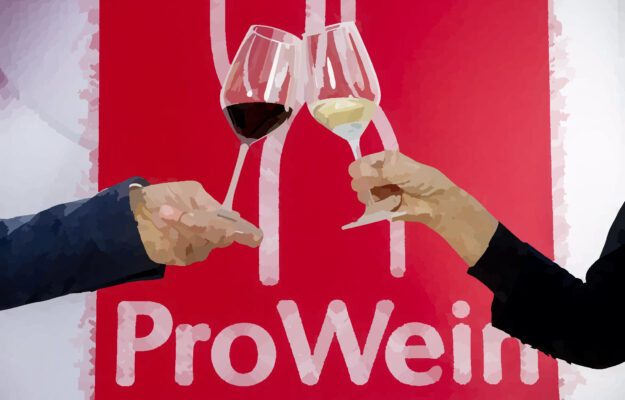
| | | Despite the many difficulties, the wine industry is approaching 2026 with an awareness of the complex situation. And while the “barometer” for the year that has just begun generally points to “stability”, there are those who expect a slight recovery. Among the many types of wine, if the one considered to be in the best health and with the best expected performance is, once again, definitely still white still wines, many are still betting on sparkling wines, but also on No-Lo wines. Here are some insights from the “ProWein Business Report” 2026 (in depth), which WineNews has analyzed ahead of ProWein 2026 (Düsseldorf, March 15-17). | |
|
| | In such a complex market (and geopolitical) phase, for wine and beyond, it would be inappropriate to announce that the negative trend has reversed. However, looking at least at the secondary market for fine wines monitored by the British platform Liv-Ex, after the first positive signs at the end of 2025, 2026 has also begun with greater confidence. Since the beginning of the year, the Liv-Ex 100 has risen by +0.6%, which now includes Bartolo Mascarello’s 2019 Barolo, Bruno Giacosa’s Barolo Falletto Vigna Le Rocche Riserva 2016, Gaja’s Barbaresco 2019, Giacomo Conterno’s Barolo Monfortino Riserva 2015 and 2019, Frescobaldi’s Masseto 2021 and 2022 and Ornellaia 2021, Sassicaia 2016, 2021, and 2022, Solaia 2021, and Tignanello 2021 and 2022 by Antinori, and 100% Sangiovese IGT Toscana 2020 by Soldera Case Basse. Italy is the protagonist of this growth, because, while the best performer to date is Promontory’s Napa Valley 2018 (+15.2%), Bruno Giacosa’s Barolo Falletto Vigna Le Rocche Riserva 2016 is in second place at +14.3%, while Soldera Case Basse’s 100% Sangiovese IGT Toscana 2020 is up +12%, Masseto 2022 is up +7.8%, and Solaia 2021 is up +6.3%. But as mentioned, growth, albeit modest, is widespread, with the Liv-Ex 1000, the broadest of the indices, up 0.4% since the beginning of the year. The Italy 100 is doing even better, up 0.7% since the beginning of the year, for the index now consisting of Bartolo Mascarello’s Barolo from the 2012 to 2021 vintages, followed by Bruno Giacosa’s Barolo, with Barolo Falletto Le Rocche del Falletto Riserva 2007 and 2008, Barolo Falletto Le Rocche del Falletto di Serralunga d’Alba Riserva 2001 and 2004, and Barolo Falletto Vigna le Rocche Riserva 2011, 2012, 2014, 2016, 2017, and 2020, as well as Gaja’s Barbaresco from the 2013 to 2022 vintages, Giacomo Conterno’s Barolo Monfortino Riserva from the 2002, 2004, 2005, 2006, 2008, 2010, 2013, 2014, 2015, and 2019, as well as all vintages from 2013 to 2022 of the most famous Supertuscans, Sassicaia, Solaia, Tignanello, Ornellaia, and Masseto, as well as all vintages from 2011 to 2020 of Soldera Case Basse’s 100% Sangiovese IGT Toscana. At the top is Giacomo Conterno’s Barolo Monfortino Riserva 2005: +21% in two months. | |
|
| | Presenting the Pompeii wine project through the network of Italian Cultural Institutes abroad run by the Ministry of Foreign Affairs, to share the enthusiasm, vision, and uniqueness of a unique model of public-private partnership based on culture, sustainability, scientific research, and the promotion of Italian products, among the most important and prestigious in the history of the union between wine and culture, which is writing a new chapter for viticulture and Italian and world cultural heritage. In recent days, the Archaeological Park of Pompeii and the Tenute Capaldo Group did just that, with the first stop at the Institute in London, launching a new phase in the process that will see the (re)birth of an “archaeological vineyard” in the Roman city buried by the eruption of Vesuvius in 79 AD and the construction of an organic farm to resume production of “Pompeian wine”. | |
|
| | | In a difficult 2025 for the wine market, more than half of Italian wineries defended themselves, breaking even on 2024 (which, it should be remembered, was a record year, at least in terms of exports, with €8.1 billion), while more than 4 out of 10 companies saw a decline in turnover, albeit limited to a few percentage points. Meanwhile, for 2026, which has just begun, despite an uncertain and variable scenario, from tariffs on a key market such as the US to health trends and more, 70% of companies are divided between those who expect stability or a slight recovery and 30% who, on the other hand, expect a further, albeit slight, decline in turnover. To stem this decline, the vast majority of companies will maintain stable investments in communication, marketing, and image, while a large proportion, 4 out of 10, will invest even more in sales support. This is according to a WineNews survey - which is proving very popular with readers and on social media, ed. - on the end of 2025 and the outlook for 2026, with the views of 25 leading Italian wine companies, which together have an aggregate turnover of more than €2.5 billion (over 17% of the sector’s production turnover), a varied sample of small prestigious companies, large groups with prestigious brands, and important cooperatives. | |
|
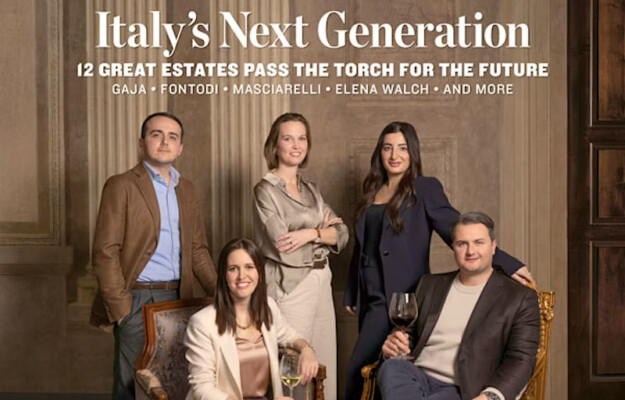
| | | From Gaja to Bruno Rocca, Elena Walch to Marco Felluga, Villa Sandi to Castello di Ama, Fontodi to Casanova di Neri, Fattoria Le Pupille to Masciarelli, D’Angelo to Donnafugata: here are the 12 great families who are leading the way into the future of Italian winemaking, featured in the cover story of the US magazine Wine Spectator, which dedicates its April 2026 cover to “Italy’s Next Generation”, the new generation of Italian wine “scions”, when Vinitaly will also be taking place (Verona, April 12-15). | |
|
| | “His journalistic work has contributed significantly to spreading a competent, independent wine culture capable of interpreting the transformations in the sector, accompanying producers, enologists, media, and operators in raising awareness and improving the image of Italian wine around the world”: Alessandro Regoli, director of WineNews, receives the “Journalist of the Year” award 2026 by Assoenologi, at the 79th Congress in Conegliano in the Prosecco DOCG Hills, a UNESCO World Heritage Site (May 28), for “promoting his constant commitment to Italian wine with WineNews, the publication he directs” (and which he founded a quarter of a century ago with his wife Irene Chiari and has been online since 2000, ed.). But for Italian enologists, led by Riccardo Cotarella, he is also “one of their own” in spreading wine culture, and they have named him “honorary enologist”. | |
|
| | The only Italian wine to boast such a long history and reputation, since its first mention in 1276 in the Gabelle di San Gimignano, Vernaccia became the “queen” of the tables of popes and kings throughout Europe, inspiring the greatest poets. And on March 3, 1966, exactly 60 years ago, it was the first Italian wine to obtain DOC status, an anniversary celebrated by the Consortium in recent days in San Gimignano, in a 2026 that is also the year in which the 750th anniversary of the first documented mention of the ancient Tuscan white wine will be celebrated. | |
|
|
|