If this message is not displayed correctly click here |
Issue 761 - November 24th - 28th 2025 - Expressly created for 3702 wine lovers,
professionals and opinion leaders from all over the world | |
|
|
| | | Wine tourism is inseparable not only from food and wine tourism, since wine is the most faithful companion at the table, but also from every other form of tourism. Paradoxically, its strength lies precisely in being more than just wine tourism. Because while it is true that wine is the “medium” for recounting the beauty of a region, experiences such as a walk in nature or a visit to a museum provide a better understanding of what is in the glass. At “Benvenuto Brunello” 2025 in Montalcino, Luciano Ferraro, deputy editor of “Corriere della Sera”, compared the case histories of Ceretto, Borgo San Felice, Feudi di San Gregorio, and Jermann. | |
|
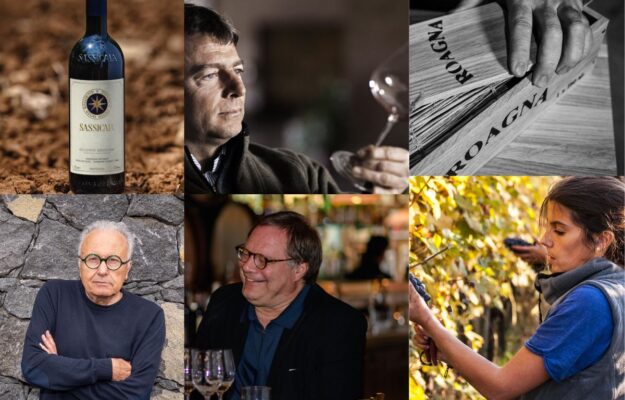
| | American wine critics have once again crowned Italian wine: there are 21 labels from Italy in “The Enthusiast 100” 2025, the US magazine’s ranking of the best wines ever tasted, including No. 1, Stilèma Taurasi Riserva 2018 from Campania-based Mastroberardino, “accompanied” in the “Top 10” by the legendary Sassicaia from Tenuta San Guido, with the 2022 vintage, at No. 4, and by the Brunello di Montalcino 2020 from Poggio di Sotto, part of the ColleMassari group, and among the stylistic references of the territory, at No. 10. Scrolling down the list, for Italy, we find the 2021 Redigaffi from the famous Tua Rita at No. 16, followed by another Montalcino must-have, Argiano’s 2019 Brunello Vigna del Suolo at No. 18. We remain in the region with Terre Nere’s Brunello di Montalcino Capriolo Riserva 2019 at No. 26, while Banfi is at No. 30 with its Chianti Classico Riserva 2019. Next, at number 32, is G.D. Vajra’s Barolo Albe 2021, while at number 34 we are back in Piedmont with Diego Morra’s distinctive Verduno Pelaverga 2023. At number 36, back to Tuscany with another historic name from the region, Salvioni, with its Brunello di Montalcino 2019, while flying to a small patch of land in the Langhe, namely the Barolo Monvigliero Cru, with a unique double, given that there are versions by Vietti, at no. 38, and Fratelli Alessandria, at no. 40, both from the 2021 vintage. At no. 41, the ColleMassari group again, which thus scores a double with Grattamacco’s Bolgheri Rosso 2023, while at no. 53 there is one of the historic Supertuscans, San Felice’s Vigorello IGT Toscana 2020, and at no. 54, there is another gem from Montalcino, namely Altesino’s Brunello Vigna Montosoli 2019. At No. 58, we fly to the great red wine territory of Veneto with Pasqua’s Amarone della Valpolicella Famiglia Pasqua 2019, while at No. 71, we climb the mountains with Moser's Trentodoc Rosé Extra Brut 2019. Closing the ranking for Italian wines is Il Blu IGT Toscana 2021 from Brancaia at No. 74, Chianti Classico Gran Selezione Vigneto di Campolungo 2020 from Lamole di Lamole (Herita Marzotto Wine Estates) at No. 85, Alto Adige Schweizer 2021 by Franz Haas, at no. 9, and Trentodoc Brut Nature 2020 by Rotari (part of the Mezzacorona group), at no. 94. | |
|
| | A jewel called the PDO Economy, worth €20.7 billion in production in 2024 (+3.5% year-on-year, and +25% on 2020). This is the picture painted by the Ismea-Qualivita 2025 Report: for the fourth consecutive year, the food sector continues to grow, exceeding €9.6 billion with a +7.7% increase, while wine remains stable at €11 billion. The export results for PDO and PGI products are excellent, reaching €12.3 billion in 2024 (+8.2%), thanks to the ‘double record’ of the food sector (over €5 billion) and the wine sector (over €7 billion for the first time), with the latter representing 88% of total Italian wine exports in terms of GI. Among the top 15 PDO and PGI wines (see detailed analysis), albeit with different percentages, seven recorded an increase and eight a decrease on an annual basis. | |
|
| | | Excluding 15% of industry professionals who remain undecided, there are more experts (46%) who look to 2026 with relative optimism for the performance of fine wines than those (39%) who make negative predictions, in light of the continuing scenario of geopolitical and macroeconomic instability. This is according to the 2025 Golden Vines Report by Liquid Icons. According to experts, when looking at the territories or regions of the wine world with the greatest growth potential for 2026, Piedmont ranks first overall, with 20% of responses. The 2025 Golden Vines Report also reveals the Academy's “judgments” on the best wineries and wine writers. And so, looking at the “Best Fine Wine Producer in Europe Award”, for example, behind the overall winner, Weingut Egon Müller, the top 10 include, in order, Vega Sicilia, Gaja, Armand Rousseau, Domaine Leroy, Krug, Domaine Leflaive, Château Latour, Giacomo Conterno, and Château Rayas. There is also a touch of Italy in the “World’s Best Rising Star Award”, where South African Mullineux & Leeu is at the top, but the “top 10” also includes Giulia Negri (Serradenari) and Roagna, from the Langhe. And for Italy, there is also wine writer Ian d’Agata, a renowned international critic and one of the most knowledgeable experts on Italian wine, ranked No. 5 in the “Hall of Fame Award”. | |
|
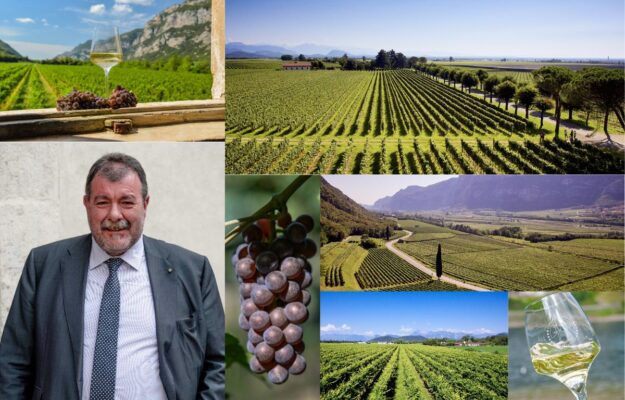
| | | If the strategy for overcoming the numerous changes affecting the wine sector is adaptation, the Consorzio del Pinot Grigio delle Venezie has long since embarked on a decisive path: on the one hand, experimentation on the “effect” of blending Pinot Grigio with 10% resistant varieties (Piwi); on the other, research in the vineyard and in the cellar, applying specific protocols to produce a naturally low-alcohol Pinot Grigio, starting from the vineyard. | |
|
| | There are no alternatives for “navigating” the “perfect storm” that is hitting wine: there is no point in resisting, but it is necessary to adapt, because resilience is the winning strategy. To identify areas for improvement, it is necessary to analyze one’s specific model and compare it with similar companies. This emerges from the annual report on the financial statements of wine companies by Studio Impresa - Management DiVino by Luca Castagnetti, in partnership with “Il Corriere Vinicolo”. The analysis paints a picture of a wine world capable of adapting to a difficult context, but one that is advancing at different speeds. Structural challenges (imbalance between production and consumption, business fragmentation, climate change) and economic challenges (inflation, conflicts, decline in purchasing power, changing consumption patterns) have different impacts on companies. | |
|
| | Turnover of €242.8 million, remuneration of 5,250 members in line with recent years, despite the difficulties, and net assets of €123 million: these are the key figures from the 2024/2025 financial statements of Cavit, the Trentino cooperative giant, which is also an important observatory on what is happening and will happen in the wine market. As CEO Enrico Zanoni points out: “The general decline in consumption is putting significant pressure on margins in the short term. In the face of adversity, our response must be geared towards maintaining a long-term vision”. | |
|
|
|