If this message is not displayed correctly click here |
Issue 776 - March 9th - 13th 2026 - Expressly created for 3709 wine lovers,
professionals and opinion leaders from all over the world | |
|
|
| | | As expected, 2025 ended on a negative note for Italian wine exports compared to 2024. This decline affects both value and volume. According to Istat data analyzed by WineNews, the value of Italian wine exports worldwide in 2025 stood at 7.7 billion euros (-3.7% compared to 2024), with 2.1 billion liters in volume (-1.8%). Sparkling wines, in particular, accounted for 2.3 billion euros in value (-2.5% compared to 2024) and 553.2 million liters in volume (+0.68%), showing a slightly better performance than still wines and reflecting the trend of recent months. | |
|
| | Weighing on the results of Italian wine exports in 2025, as expected due to tariffs, is above all the performance of the United States, the undisputed leading market for Italian wine, which totals 1.75 billion euros in value (-9.1% compared to 2024) for 339.5 million liters (-6.2%). In Europe, Germany remains the No. 1 market for Italian wine and is stable compared to 2024 at 1.14 billion euros (+0.5%), although volumes have fallen to 474 million liters (-3.2%). The United Kingdom also saw a decline, at €816.8 million (-3.8%), with a negative performance in volume as well, at 254.7 million liters (-2.3%). Canada ranks fourth, with imports of Italian wine falling to €420.7 million in 2025 (-5.8%), despite a volume increase approaching 75 million liters (+1.9%). Switzerland falls below the €400,000 mark, reaching €393.2 million in Italian wine imports in 2025 (-4.2%) and 64.4 million liters in volume (-5.1%). A positive note comes from France, Italy’s main competitor in the wine sector, with sales reaching €309.7 million in 2025 (+3.4%) and also rising in volume, now just shy of 96 million liters (+6.8%). The Italian wine sector also achieved a strong result in the Netherlands, which, with €259.6 million, recorded a 5.5% increase in value, outperforming Belgium, which fell to €217.2 million (-6.2%), and Russia, which closed the year at €207.4 million, down 16%. Sweden performed well, at 187.5 million euros (+5.2%), while the East offered little satisfaction for Italian wine: Japan fell to €176.4 million (-4.1%), China plummeted (€66.9 million, -25.1%), and South Korea (€49.3 million, -2.3%) and Hong Kong (€22.1 million, -0.6%) also declined. The star of Mercosur, Brazil, still represents a niche market, albeit one that is growing, with a value of 42.8 million euros for Italian wine in 2025 (+3.7%). India, following the agreement with Europe, is poised for growth, but for now, it is a market worth only €2.7 million for Italian wine (+5.6% compared to 2024). Australia, one of the world’s largest wine producers and the most influential in the East, imported Italian wine worth 71 million euros in 2025, a decrease of 1.7% compared to 2024. | |
|
| | Despite the overall decline, the trio of Veneto, Tuscany, and Piedmont still leads Italian wine exports, accounting for 66% of the total. According to Istat data analyzed by WineNews, Veneto, home to Prosecco, Valpolicella wines, Soave, and Pinot Grigio delle Venezie, among others, remains firmly in first place with €2.92 billion in wine exports in 2025 (-1.2% compared to 2024). Tuscany, the home of Chianti Classico and Bolgheri, IGT Toscana and Chianti, Maremma and Brunello di Montalcino, Vino Nobile di Montepulciano, and Vernaccia di San Gimignano, ranks second with 1.17 billion euros in exports (-2%). Piedmont ranks third, with 1.15 billion euros in exports in 2025 for the home of Barolo and Barbaresco, Barbera d’Asti and Alta Langa, Gavi and Asti, among others, marking a 2.2% decline compared to 2024. | |
|
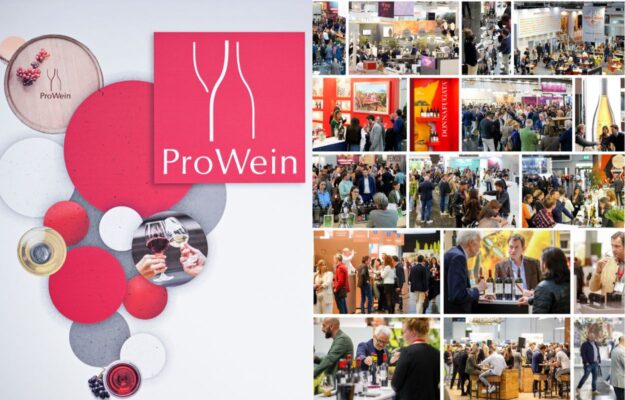
| | | Not only Germany, the second-largest market for Italian wine by value in 2025 (€1.4 billion in 2025, and among the few showing positive growth, albeit only +0.5% compared to 2024), but also neighboring Switzerland, which brought over €400 million into the coffers of Italian wineries, as well as France with €309 million, the Netherlands with 260, Belgium with 217, and Sweden with 187, Austria with 150, Poland with 131, Norway with 87, Finland with 45, the nearby United Kingdom with 816 million euros, and looking at smaller Eastern European countries such as Estonia, Latvia, and Belarus, as well as other partners currently grappling with war but potentially significant, such as Russia, with 207 million euros, and Ukraine, with 74: it is an export market worth more than 4 billion euros for Italian wine (over half of the 7.7 billion total in 2025, according to Istat data analyzed by WineNews),the market centered around Germany, and it will be the primary target for the more than 560 Italian exhibitors (second only to the German “hosts”) ready to head to Düsseldorf, where, from March 15 to 17, ProWein 2026 will take center stage, down in numbers compared to the recent past, but remaining a moment of business and exchange of great importance for Italian companies and regions. | |
|
| | | While the figure as of January 31, 2026, showed a 5.9% increase in stock levels compared to the same date in 2025, the figures updated as of February 2026 show a +5.8% increase compared to a year ago, for a total of 58.6 million hectoliters of wine, to which must be added 6 million hectoliters of must (+34.2%) and 421,711 hectoliters of new wine still in fermentation (+38.4%). This is according to the latest update from the ICQRF’s “Cantina Italia”. With 20 DOP and IGP wines accounting for 58.5% of the total stock of wines with a geographical indication. | |
|
| | Fantini Wines, an Abruzzo-based winery founded and led by Valentino Sciotti (and, since 2020, owned by Platinum Equity, ed.), is the “Best Italian Wine Producer” of 2026 for the “Spring Tasting” 2026 by Mundus Vini, one of the most authoritative wine competitions in the world, organized by “Meininger”. The competition recognized Italy extensively, with more than 40 “Best in Show” awards (going to Mezzacorona, Banfi, Varvaglione, Kurtatsch, Settesoli, Siddùra, Zenato, Tollo, among others), and over 787 medals, making it the most awarded country, with 8 “Grand Gold” and 446 “Gold” medals, going to wineries such as Lo Sparviere, Tenuta Ulisse, Bosca, Cavit, Schenk, Bottega, Cottini, Rocca delle Macìe, Ruffino, Baglio del Cristo di Campobello, Cecchi, Villa Sandi, Ceci, Cantine Ermès, Mack & Schuhle, Viticoltori Ponte, Kellerei Kaltern, Vignaioli del Morellino di Scansano, Ruggeri, Cadis, San Felice, Farina, and many others. | |
|
| | The sweet bubbles of Asti and Moscato d’Asti are making their mark in Asia: in 2025, sales in the East grew by a whopping 55% for Moscato d’Asti, making the “Celestial Empire” the third-largest market for this type of wine, and Asti Spumante in the Asian region also saw a 20% increase, thanks mainly to Japan, United Arab Emirates, Kazakhstan, China. This is according to data from the Asti DOCG Consortium, which, in the “Far East”, paints a picture that is bucking the trend, with “a 9% decline in global sales volume in large-scale distribution and retail (nearly 75 million bottles)”. | |
|
|
|