If this message is not displayed correctly click here |
Issue 782 - April 20th - 24th 2026 - Expressly created for 3725 wine lovers,
professionals and opinion leaders from all over the world | |
|
|
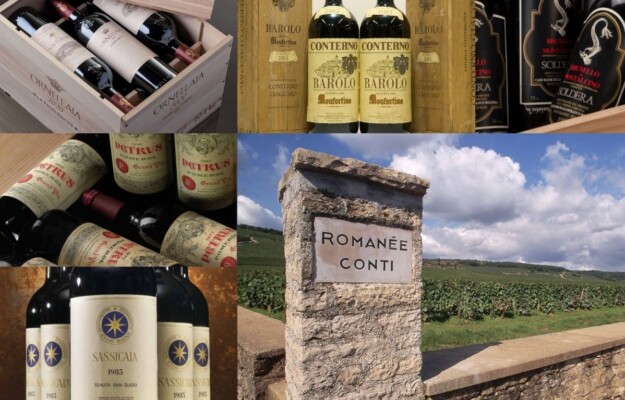
| | | In stark contrast to the global trend of declining alcohol consumption, fine wine auction market continues to grow also in 2025. At least according to the annual Barometer from iDealwine, France leading auction house, which last year auctioned off 300,000 bottles, recording a +18.5% increase in volume and a +9% increase in value for a total of 42.4 million euros, with the only decrease in the average price per bottle: 137 euros (-8%). The big names from Burgundy and Bordeaux lead the global rankings, but Italy also saw a +37% increase in value, with its fine wines accounting for 51% of non-French sales. The 1985 Sassicaia commanded the highest price (€2,629). | |
|
| | Climate change, premiumization, changing tastes, sustainability, experiential consumption: these are 5 phenomena which are transforming the world of wine, as well as the routes and intensity of investment. Vineyards “confirm themselves as one of the most attractive alternative assets for international investors”. This is according to “The Wealth Report” 2026 by Knight Frank, the London-based real estate consultancy which analyzes the growing role of the wine sector in the strategies of major wealth holders. Several regions, including Italian ones, stand out in terms of investor interest, such as South Tyrol, Friuli, Chianti Classico, Montalcino, Bolgheri, Barolo and Barbaresco, alongside other global wine regions such as the Loire Valley, Champagne, Bordeaux and Burgundy in France, for example, as well as New Zealand, Australia, the U.S., Argentina, Germany, Georgia, Chile, South Africa and the UK. “Despite the challenges that the wine sector is coping with, demand for particularly well-suited vineyards remains solid. The wine market is suffering a bit; there are fewer people buying vineyards compared to some time ago, but at the same time this translates into an opportunity for producers who want to invest in wine and vineyards”, comments Alexander Hall, head of International Vineyards at Knight Frank, in an interview with WineNews (in depth). The Knight Frank report also highlights average values for certain vineyards. In Italy, Barolo ranks at the top ($2.7 million per hectare), followed by Bolgheri and Brunello di Montalcino ($1.2 million per hectare), and Chianti Classico ($245,000). In France, the highest prices are in the “Grand Cru” vineyards of the Côte de Nuits in Burgundy ($55 million per hectare, but that is just a statistic, as there is practically no market for it; a hectare of non-cru vineyards fetches around $1.05 million). Then there is the Côte de Blancs in Champagne ($1.9 million), Margaux in Bordeaux ($1.65 million), and Sancerre in the Loire ($300,000). In the U.S., prices range from $1.17 million in Rutherford, Napa Valley, to $270,000 in the Dundee Hills in Oregon. In New Zealand, the Marlborough region requires an investment of $120,000, as does Essex, the UK, and $110,000 in Kent and Sussex. Vineyards in Stellenbosch, South Africa, are valued at $60,000, and those in the Barossa Valley, Australia, are valued at $55,000. | |
|
| | In 1976, exactly 50 years ago, Zonin winery (then led by Gianni Zonin), now Gruppo Zonin 1821, purchased Barboursville Vineyards, a historic and beautiful estate in Virginia, a symbol of wine in the USA, arisen from the winemaking dream of Thomas Jefferson, third president of the United States of America (from 1801 to 1809). And now, as part of the Negotiated Crisis Resolution process which Zonin 1821 has requested to complete an internal reorganization with a view to a major turnaround, managed by Maurizio Rossetti, a manager with proven experience in the financial and industrial fields, the news of the sale of Barboursville Vineyards arrives. This is historic news in its own way, given that Zonin investment in Virginia was one of the first, if not the first ever, investments in Italian wine in the United States. | |
|
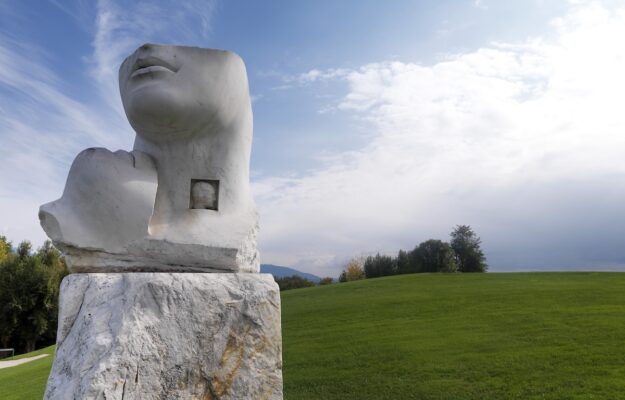
| | | An increasing number of wineries in Italy are investing in art among permanent collections, installations and site-specific works. In some cases, their architecture is signed by great designers, strengthening the dialogue between aesthetics and territory. Up to today, over 60 Italian wine companies have established a close bond with art, mapped by MetodoContemporaneo, Italy first permanent observatory on art and wine landscape of the University of Verona, and Bam! Strategie Culturali: from Ca’ del Bosco to Zenato, from Pasqua to Ceretto, from Antinori to Planeta, from Frescobaldi to Donnafugata, from Castello di Ama to Carapace - Tenute Lunelli, from Feudi di San Gregorio to Fontanafredda, from Lungarotti to Tenuta di Argiano, from Masciarelli to Bosca, from Villa Sandi to La Raia, just to name some of them. The bond between wine and art is rooted in a shared tension toward creation, time and transformation. If wine is the result of a process in which nature and human intervention engage in dialogue until reaching a balance, contemporary art shares its project-based dimension and its ability to interpret the present. Today, this bond has become more structured, where many wineries have chosen to invest steadily in artistic production. | |
|
| | | The entire Italian wine industry is closely monitoring the innovations introduced by the “Wine Package” recently approved by the European Union. This includes a major region like Tuscany (€1.17 billion in exports in 2026, 14.8% of the national total). In recent days, at Vinitaly 2026 in Verona, the leaders of consortia representing denominations such as Bolgheri, Chianti Classico, Montalcino, and Montepulciano met with PD-S&D Mep Dario Nardella, a member of the Committee on Agriculture and Rural Development, to discuss the measure. | |
|
| | If 2026 exports started negatively (-18% in January 2026 compared to January 2025, according to Istat data analyzed by WineNews), the uncertainties deriving from the war in the Middle East are not only weighing on the market overall, but are also blocking access to some countries. “One can’t fail to note the halt in orders in around twenty markets, from the Gulf countries to neighboring ones, which together account for an annual export value of €80 million”, explained Lamberto Frescobaldi, president of Uiv, at the National Council of the wine producers organization held at the Girlan winery in Cornaiano (Bolzano) – but there are also major critical issues on the horizon, ranging from the cost of dry raw materials to transport costs, as well as the decline in tourism and wine tourism, factors which are unsustainable for a sector already strained by a clearly contracting demand”. | |
|
| | Dealcoholized wines in Italy? Bureaucracy is heavy, but Frizero proves it can already be done. In a situation that many still view as unclear, the case history of a small Veneto winery arrives, headed by ceo Roberta Mottadelli, in Albizzano, Valpolicella. A month ago, it obtained all the necessary licenses, with a plant which began dealing with alcohol in March, the first in Italy (including for third parties). It is a virtuous, though not simple, journey that we will explore in more detail.
| |
|
|
|