If this message is not displayed correctly click here |
Issue 788 - June 1st - 5th 2026 - Expressly created for 3713 wine lovers,
professionals and opinion leaders from all over the world | |
|
|
| | | The district model continues to pay off in the agri-food sector. Overall, in 2025, exports set a new record, reaching nearly 30 billion euros, up 4.1% from 2024. The wine sector, despite a slight decline (-1.7%), remains the leader in absolute terms (€6.4 billion). The top-performing districts were the Alba and Cuneo Pastries district (€2.6 billion in exports, +13.7%), the Langhe, Roero, and Monferrato Wines district (€1.9 billion, -0.9%), and the Parma food district (€1.7 billion, +1.4%). This is according to Intesa Sanpaolo’s district Monitor. | |
|
| | As traditional markets decline and emerging markets grow, diversification is essential for the future of Italian wine exports (making the most of new EU free trade agreements), just as, in the domestic market, the challenge of reaching young people is crucial to countering the decline in sales linked to a drop in the number of consumers and the frequency of consumption. Nomisma Wine Monitor, with Denis Pantini, recently identified opportunities to work on at the 79th Assoenologi Congress in Conegliano to reverse the negative trend that can (and must) be managed. Diverse market trends have had a direct impact on our exports, which, after surpassing the historic threshold of 8 billion euros in 2024, stood at 7.8 billion in 2025 (-3.6%). The most concerning overall figure is the decline in value (total PDO -3.3% vs. +0.6% in volume). The decline in exports is linked to a drop in average prices, a shift in the export mix, or the need to sell the same product at more competitive prices. In the first quarter of 2026, compared to 2025, the decline is close to -40% in the U.S. (distorted by the rush to avoid tariffs, but compared to 2024 the decline is -30%), with a strong recovery in Japan (+22%) and Canada (+5%), while China (-27.5%) remains in recession. But it is possible to find new avenues for growth by working to increase the share of exports relative to production (Italy exports 40–45% of its wine, and reaching Australia’s 58% is a realistic goal), and by investing in expanding into non-traditional markets with higher growth rates. In fact, until 2014, the traditional markets (over 100 million euros per year) accounted for 85% of our exports; today they account for 80%, while the others have grown by 30%. Analysts note that the new geopolitical landscape is concentrated in three macro-regions: Eastern Europe and Central Asia (Poland, Romania, the Czech Republic, and Kazakhstan); Asia and the Far East (South Korea and Thailand); and Latin America (from Mexico to Colombia). On the domestic front, however, the challenge lies entirely in retaining the loyalty of younger generations, but the real strategic issue for the future is the profound demographic shift and changing consumer habits in Italy. Istat projections for 2035 estimate the Italian population will fall below 58 million, with consumers aging. | |
|
| | Imagine an evening when all of Italy sits down to dinner together, with a glass of Prosecco Docg, the event’s official toast, among the 11,000 spectators at the Arena di Verona, yesterday, hundreds guests of honor dining in Piazza Bra, and millions of Italians in their homes. And from there, with one of the world’s temples of music as a backdrop, a symbol of Verona and a UNESCO World Heritage Site, two Italian excellences recognized as World Heritage Sites, Italian cuisine and the “art of bel canto”, jointly launched the nomination for the recognition of the “Classic Neapolitan Song”. All of this was “World Champions – Italia Loves UNESCO”, the result of a collaboration between the Ministries of Culture, Agriculture, Tourism, Foreign Affairs, and Sport & Youth, together with the Fondazione Arena di Verona and in partnership with ITA-Italian Trade Agency and Vinitaly-Veronafiere. | |
|
| | | A strong corporate culture and prudent business management, the ability to anticipate changes in markets and consumer behavior, swift decision-making, proper product positioning, and the opening of new markets and distribution channels: these are sound principles that have always guided, or should guide, the work of companies in every sector. And these are the areas that the wine industry, which is currently experiencing what some call a crisis and others a transformation, must now focus on more closely. Specifically, by focusing on five levers to regain competitiveness: management, markets, speed, positioning, and consumers, with “wine tourism, emerging markets, and a new corporate culture” pointing to “the directions along which Italian wine can build competitiveness in the coming years”. This is the conclusion drawn from Envisioning2035 - Wine [R]evolution, the summit organized by Edoardo Freddi’s FreedL Group, held in Milan, featuring contributions from, among others (in depth), Edoardo Freddi himself, Luca Castagnetti, a certified public accountant and founder of the DiVino Management Studies Center at Studio Impresa, Alessandro Mutinelli, president and CEO of Italian Wine Brands, Ettore Nicoletto, a long-time manager in the wine sector, and Pierluigi Catello of Michael Page, a British multinational recruitment firm. | |
|
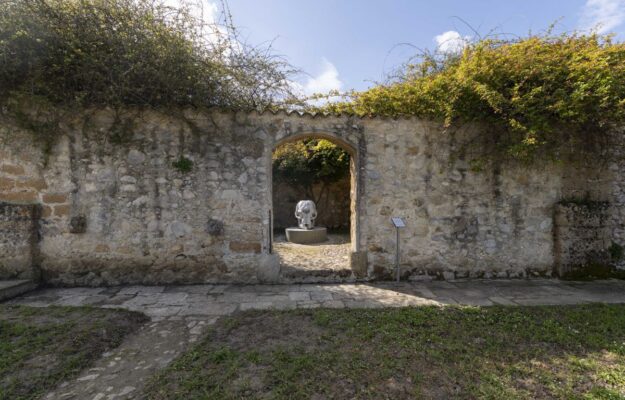
| | | If the union of wine and art is becoming increasingly fascinating, it is thanks to pioneering projects such as the first artist-in-residence program at a winery: Planeta’s “Journey to Sicily”, through which, for over 20 years, the brand, one of the architects of the “renaissance” of Sicilian wine, has engaged leading artists in a direct encounter with the island’s culture, transforming it into a space for contemporary creation. This was the case for Monira Al Qadiri, who, with “Geologies of Time” curated by Valentina Bruschi and Vito Planeta, created the site-specific work “Falconeri” at Tenuta Ulmo. | |
|
| | Few wines can boast the history and uniqueness of Vernaccia di San Gimignano. So much so that this famous white wine, in 2026, celebrated not only 60 years of DOC status but also 750 years of illustrious mentions, from Dante to Boccaccio, from Francesco Redi to Vasari, from Mario Soldati to the enthusiasts and experts gathered at “Regina Ribelle - Vernaccia di San Gimignano Wine Fest”, the Consortium’s festival in the “Manhattan of the Middle Ages”, where the history of a “status symbol” unique for centuries was retraced, both in and out of the glass (see WineNews review of the best tastings), long before Tuscany became a global benchmark for its reds, transcending trends and tastes, contemporary to every era, at the table and beyond. | |
|
| | The bond between wine and art is strong and unbreakable, with wineries not only collecting works by established and emerging artists but also often acting as patrons themselves. Take Antinori, for example, whose latest acquisition through the “Antinori Art Project”, curated by Ilaria Bonacossa, is the work “Sampling the Vineyard”, commissioned from photographer Armin Linke to enrich the permanent collection of the Antinori Winery in Chianti Classico. The piece enters into a dialogue with the iconic and monumental signature winery in the heart of Tuscany. | |
|
|
|