If this message is not displayed correctly click here |
Issue 806 - October 5th - 9th 2026 - Expressly created for 3680 wine lovers,
professionals and opinion leaders from all over the world | |
|
|
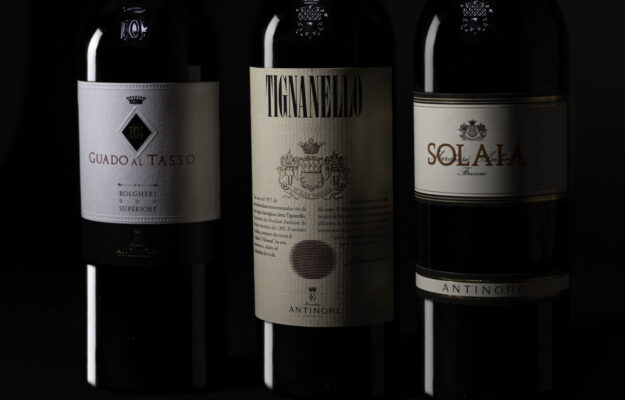
| | | Marchesi Antinori’s fine wines are literally flying off the shelves: on the nights between October 2 and 4, a theft occurred in Cortona, where one of the leading names in Tuscany, Italy, and the global wine world has its logistics and shipping center, involving 30,000 bottles of the company’s most iconic labels (Guado al Tasso, Solaia, Tignanello), among the most highly regarded and sought-after Italian wines by international collectors, with an estimated value of over 5 million euros. Given the sheer number of bottles and their value, this is the largest wine theft ever carried out in Italy. Investigations by the Police and Carabinieri are ongoing. | |
|
| | The fine wine market’s return to growth is gaining momentum, with Italy (the Langhe region in particular) playing an increasingly prominent role (alongside Champagne). This trend comes from a niche comprising a very small number of world-renowned wines, but their performance offers a glimmer of hope and serves as a counterbalance to a wine market that, in general, is still slowing down. This emerges from WineNews’ analysis of trends in the Liv-Ex indices, the benchmark platform for the secondary market. From January through September, the Liv-Ex 100 posted a solid +2.1% gain, rising to +4.4% over the past 12 months. Italy has four labels among the index’s top 10 best-performing wines overall, starting with No. 1, Bruno Giacosa’s Barolo Falletto Vigna Le Rocche Riserva 2016, which has risen 31.7% since the beginning of the year, alongside Conterno’s 2019 Barolo Monfortino Riserva, up 19.4%; Soldera Case Basse’s 2020 100% Sangiovese IGT Toscana, up 18.7%; and Antinori’s 2021 Solaia, up 14.1%. And with Monfortino and Giacosa also ranking in the “top 10” of the Liv-Ex 1000, the broadest of the Liv-Ex indices, which rose by +1.3% in 2026 and +2.2% over the past 12 months. This is largely thanks to the Champagne 50 (+4.1% in 2026 and +4.6% over the past 12 months), as well as the Italy 100, which rose +3.5% in the first 9 months of 2026 and +4.9% over the past year (during which time it was the best-performing index overall). This is a significant achievement for the Italian index, which now comprises various vintages (see in-depth analysis) of Barolo from Bartolo Mascarello and Bruno Giacosa, Monfortino from Giacomo Conterno, Barbaresco from Gaja, the most famous Super Tuscans, from Sassicaia of Tenuta San Guido to Solaia and Tignanello from Marchesi Antinori, Frescobaldi’s Ornellaia and Masseto, and Soldera Case Basse’s 100% Sangiovese IGT Toscana. The category’s “top 10” is led by the Langhe region, because in addition to the aforementioned Liv-Ex 100 “record-holder” from Giacosa, the podium also features the 2005 Barolo Monfortino Riserva, up 30.4%, and Gaja’s 2015 Barbaresco, which has appreciated by 22.5% since the start of the year. The growth is widespread and applies to all the major indices (with the Bordeaux 500 recovering to -0.2% in 2026 and +0.4% over the past 12 months). | |
|
| | The global decline in wine consumption is plain for all to see, and when it comes to identifying the countries where consumption has fallen the most, the figures from the OIV (International Organization of Vine and Wine), analyzed in depth by the AAWE, reveal: between 2024 and 2025, global wine consumption fell by 569.5 million liters (-2.7%), with the sharpest decline occurring in Italy, which recorded a drop of 210.5 million liters (-9.4%). The situation is no better in the U.S., the top export market for Italian wine (-4.2%), nor in Germany, the leading market in Europe (-4.3%). There are, however, some encouraging signs. For example, the positive figures from Brazil, at +130.1 million liters (+41.9%), which represents one of the greatest hopes for the future of Italian wine and is an emerging market of particular interest among the signatories of the Mercosur agreement. | |
|
| | | Wine bottling figures don’t tell the whole story, but they do reveal a great deal, especially those for wines with a Designation of Origin (DO) or Geographical Indication (GI), about how the wine market is faring. Even in a context extremely challenging, particularly for red wines, as has been the case for some time now, there are some positive signs, particularly from white and sparkling wines with designations. At least according to the Business Intelligence division of Valoritalia, the leading certification body for Italian wine (and beyond), which, with 219 certified designations, covers 56% of Italy’s DOP and IGP wines. In fact, data updated as of September 30 regarding the appellations and productions certified by Valoritalia show that in the third quarter of 2026, the decline in bottling volumes came to a halt (-0.3% compared to the same period in 2025), and the decline for the first nine months narrowed to -3%, totaling 9.86 million hectoliters. However, there are some differences: over the first nine months, DOC (-0.5%) and DOCG (-0.2%) wines remained essentially flat compared to 2025, while the situation for IGT wines remained largely negative (-13%). Still white wines performed well (+1.8% between January and September) as did sparkling wines (+1.3%), while red wines fared poorly (-8.8%). | |
|
| | | Gaja, one of Italy’s most famous, beautiful, and prestigious wineries and a global icon of Italian wine, denies the rumors circulating about an alleged sale of the winery and Gaja Distribuzione to an international group. “The news is false: it’s a rumor from the bar. There have never been any negotiations with prospective buyers. We’ve received many proposals, but negotiations have never begun. Gaja has no price because it is not for sale”. The family reaffirms “its commitment to continuing the tradition of generational continuity”. | |
|
| | The Terra Moretti Group, owned by the Moretti family and proprietor of Bellavista and Contadi Castaldi, two of Franciacorta’s top brands (as well as Petra in Suvereto, Tuscany, and Sella & Mosca in Sardinia), denies that Contadi Castaldi itself is up for sale, contrary to what was reported in an article published by the business and finance daily “Il Sole 24 Ore” (Saturday, October 3, by Giorgio Dell’Orefice), which claimed that the Argea Group (part of the Clessidra fund) was poised to acquire Contadi Castaldi. However, the luxury resort L’Andana, located in the Tuscan Maremma in Castiglione della Pescaia, is up for sale, but only in the event of a substantial offer. | |
|
| | Excellence in the glass, with an eye toward the future of an industry undergoing profound change. These are the highlights of the 35th Merano Wine Festival, taking place at the Kurhaus in Merano from November 6-10, and presented in Rome. This historic event (for which WineNews will be a media partner) will feature five days of festivities, including tastings, science, and culture, and will launch, among other initiatives, the Merano Wine Observatory, to “understand how wine will be produced, sold, consumed, and perceived in 5, 10, or 20 years”. | |
|
|
|