If this message is not displayed correctly click here |
Issue 772 - February 9th - 13th 2026 - Expressly created for 3673 wine lovers,
professionals and opinion leaders from all over the world | |
|
|
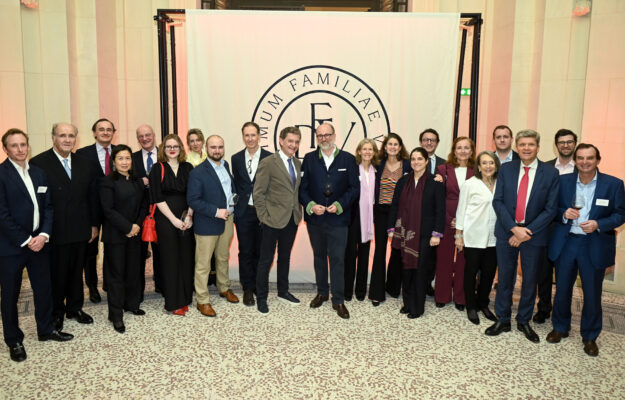
| | | Improving the quality of wine, but also of the environment, work, and businesses, to continuously strive for excellence, generation after generation, thanks in part to exceptional, rare, and unique fine wines that are immune to economic downturns: this is the philosophy that unites the great wineries of Primum Familiae Vini - Pfv, 12 wine-producing families of the oldest tradition and importance worldwide (including the Italian Tenuta San Guido and Marchesi Antinori, together with names such as Pol Roger, Vega Sicilia, Torres, Domaine Clarence Dillon and others). A vision confirmed in recent days in Paris, in the beautiful Grand Palais, and in interviews with WineNews. | |
|
| | The EU Parliament has said “yes” to the “Wine Package”. More funds for winegrowers to adapt production to market developments; additional tools to deal with extreme weather events; clearer rules for the labeling of dealcoholized wines and support for wine tourism, exports, and promotion are the pillars of the legislation, approved today by a large majority (625 votes in favor, 15 against, and 11 abstentions). It is a substantial document that touches on many aspects, such as new labels that clarify non-alcoholic and low-alcohol wines. In this case, the regulations amend the rules on the labeling of dealcoholized wines with the term “non-alcoholic”, accompanied by the expression “0.0%”, which may only be used if the alcohol content of the product does not exceed 0.05% vol. Products with an alcohol content of more than 0.5% vol., but which are at least 30% lower than the standard alcohol content of the wine category before dealcoholization, must be labeled as “low alcohol content”. To respond to natural disasters, extreme weather conditions, or plant diseases, winegrowers will receive additional financial support. The text stipulates, and this is a crucial point, that EU funds may also be used for the permanent grubbing-up of vines in order to stabilize production. The ceiling for national support for wine distillation and green harvesting is set at 25% for the wine sector for each Member State. Measures to stimulate economic growth in rural areas and to promote quality European wines in third countries have been announced as eligible for EU funding of up to 60% of the costs incurred, while Member States may add additional coverage of up to 30% for small and medium-sized enterprises and 20% for larger companies. Additional financial support for producers to promote wine tourism is also included. Activities that can be funded also include information and promotion initiatives (advertising, events, exhibitions, and studies). In-depth analysis of the reactions, from Ceev to Federvini, from Uiv to Confcooperative, from Copa-Cogeca to Confagricoltura, from Fivi to Coldiretti. | |
|
| | Exports are down slightly (after years of record highs), domestic consumption is slowly but steadily declining, and production is too high compared to actual demand for wine. The scenario in Italy, as in France, is very similar, net of the numbers. But while France has decided to finance the grubbing up of another 32,500 hectares of vineyards with €130 million in extraordinary resources, and the government is putting pressure on Europe to obtain another 80 million for crisis distillation, even though French President Emmanuel Macron considers it a “terrible” thing, as he said at the opening of Wine Paris (a few days ago), for now Italy seems to be focusing on other strategies, and above all on promotion. As explained to WineNews by the Minister of Agriculture, Francesco Lollobrigida. | |
|
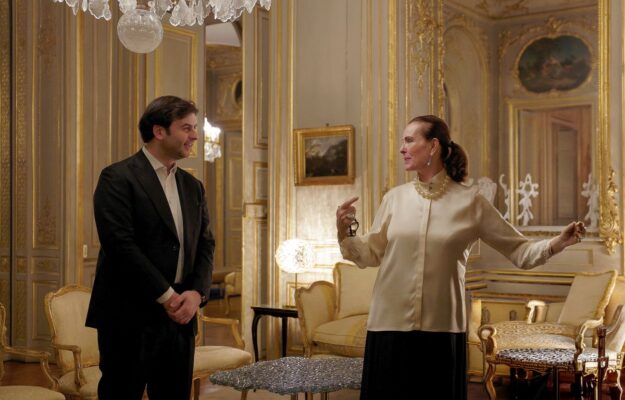
| | | A thousand-year-old, deeply rooted culture, an art of living and an “art de vivre” based on pleasure and the cult of beauty, recalling the words of French President Emmanuel Macron at Wine Paris; a gastronomy that views food not only as nourishment, but as a social ritual linked to the table, of which wine is the most faithful companion, and for its connection to the territory, considering it a cultural heritage on a par with monuments, now recognized by UNESCO for both French and Italian cooking; the fact that they are the world’s “superpowers” of taste and “beauty and craftsmanship” in aesthetics, fashion, and design; and that, thanks to all this, they have transformed high craftsmanship into a global industry. Although they love to tease each other, the cultural values that Italy and France share are also the basis of their identity. These values were celebrated during Wine Paris with an exclusive “off-fair” event at the Italian Embassy, featuring Pasqua Vini and its latest investment: Sangue d’Oro, the Passito di Pantelleria DOC produced by French actress, supermodel, and Chanel muse Carole Bouquet, a true global style icon (who, with WineNews, among the guests at the event, spoke about her passions in a video that will soon be online, ed.). | |
|
| | | Between business and glamour, Franciacorta, “the only Italian wine district focused solely on Metodo Classico sparkling wine”, as stated by the president of the Franciacorta Consortium, Emanuele Rabotti, made its bubbles shine in Paris. Between Wine Paris and the most beautiful places in the City of Light, an evening saw “Saten flow on the Seine”, with many toasts celebrated while sailing through the heart of the French capital on the “Bateau Mouche”. This was also to celebrate a 2025 that saw Franciacorta exports grow by 5.3% over 2024. | |
|
| | In a market context marked, in general, by a negative trend, especially for red wines, Tuscany is coming to terms with a complex reality, to which it is responding with the strength of its identity “and a clear strategic vision, capable of guiding the transformations in the sector rather than suffering them, focusing on the path of value and excellence”. This message came from PrimaAnteprima, held yesterday in Florence, an event that opened the “Settimana delle Anteprime” (Preview Week). According to Ismea figures presented by Fabio del Bravo, exports of Tuscan PDO wines, 96% of which are reds, in the first 10 months of 2025, showed a slight increase in volume to 731,000 hectoliters (+0.7%), but a sharp decrease in value (-8% to €682 million), a figure that “should be interpreted correctly as a normal readjustment after the record peaks of previous years”. | |
|
| | Canada, partly due to the diplomatic crisis with the United States, is increasingly turning to Italian wine, with Italy, unsurprisingly, being the leading partner in terms of volume at 56.1 million liters (+9%) and second in terms of value at €329.1 million (+6%). This is at least the case from January to September 2025, compared to the same period in 2024, according to Canadian customs data analyzed by the Interprofessional Organization of Spanish Wine (Oive). Overall, Canada has reduced its total wine imports in value (-8.3%), but not in volume (+1.3%). | |
|
|
|