If this message is not displayed correctly click here |
Issue 791 - June 22nd - 26th 2026 - Expressly created for 3705 wine lovers,
professionals and opinion leaders from all over the world | |
|
|
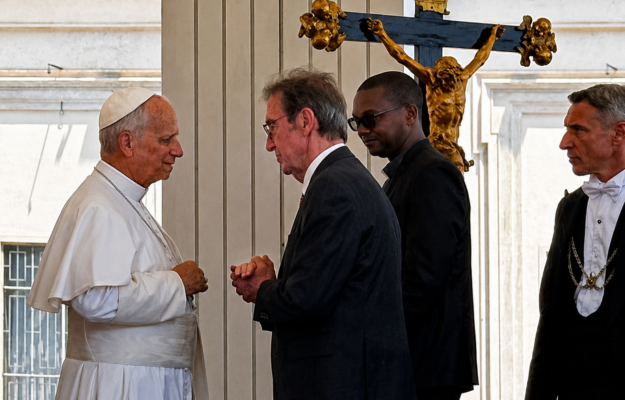
| | | If wine has always been a symbol of sharing and peace, and if the very theme of peace, in this era marked by wars, is naturally at the center of Pope Leo XIV’s thoughts, then the participation of Assoenologi in the general audience at the Vatican in recent days and the meeting between Pope Prevost and the president of the Italian and international enologists, Riccardo Cotarella, takes on a profound symbolic meaning. He told WineNews: “I have entrusted Italian viticulture to his prayers. His closeness and blessing give us hope and encouragement. We cherish the value of the land and of wine as an expression of community, culture, and dialogue among peoples”. | |
|
| | European wine is looking beyond its challenges and aiming to build the future through greater collaboration between businesses and national and European institutions, recognizing its economic, cultural, environmental, and identity-defining value. This is the message that emerged from the European Wine Summit organized by the Comité Européen des Entreprises Vins (CEEV), led by Marzia Varvaglione, in Taranto. The sector is facing a challenging period: global consumption has fallen from 242 million hectoliters in 2016 to an estimated 208 million in 2025 (-14%), while the value of international trade, after reaching a record high of 38 billion euros in 2022, has stabilized at around 33.8 billion. Despite this, the European wine model continues to be a source of resilience and competitiveness, contributing 130 billion euros to the EU economy. The discussion focused on strengthening competitiveness, enhancing wine’s appeal to consumers, adapting agricultural and trade policy tools, and implementing health policies based on scientific evidence. Among the priorities are recognizing the strategic role of wine businesses, improving access to international markets, harmonizing regulations, and striking a balance between environmental and economic sustainability goals. “We are not here to complain about our difficulties, but because we believe in wine”, said CEEV President Marzia Varvaglione, reiterating the need to strengthen the “connection with society, engage new adult consumers, and reaffirm the value of wine culture”. Wine is “much more than an agricultural product. It is part of our cultural heritage, our regional identities, and our rural economies”, reiterated European Commissioner for Agriculture Christophe Hansen, “and it preserves a body of knowledge passed down through generations. Today in Taranto, I wanted above all to hear directly from producers and understand the difficulties they are facing during a period marked by significant market, climate, and consumer-related challenges. This is precisely why we presented the “Wine Package”, to provide Member States and the sector with concrete tools to support adaptation and strengthen competitiveness”. | |
|
| | The wine and foodservice markets in general are struggling, but some businesses continue to grow. Like Signorvino, the chain of wine bars with a dining menu founded in 2012 by Sandro Veronesi. After posting 90 million euros in revenue in 2025, it now has 43 stores in Italy, France, and the Czech Republic, with the goal of reaching 50 by 2026. Upcoming openings are scheduled for Udine (July 8), Vicenza (July 14), followed by Marcianise, Milan CityLife, Naples, Erbusco, and Padua. “Bringing our model of hospitality and food-and-wine culture to Udine in a space of this caliber is a significant achievement for us”, says General Manager Luca Pizzighella. “Opening in central, recognizable locations reflects our desire to bring wine back to the heart of urban social life and make it accessible, even to younger generations, without trivializing it”, says Signorvino CEO Federico Veronesi. | |
|
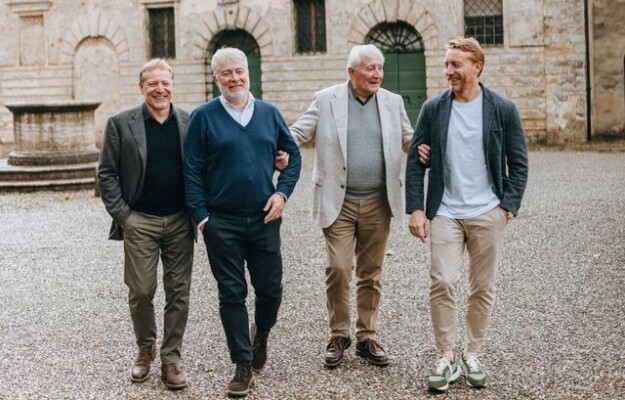
| | | Without a doubt, the most illustrious figure in history to have ever traveled the route from Tuscany, and Florence in particular, to Romagna, toward one of its capitals, Ravenna, was Dante Alighieri, the “Supreme Poet,” who was born in Florence in 1265 and spent the last years of his life in Ravenna, exiled from his hometown. Playing with history, however, the reverse journey, in our time and in the world of wine, from Ravenna to Tuscany, and specifically to Castelnuovo Berardenga, in the Chianti Classico area, was undertaken exactly 60 years ago by the Poggiali family, who came from Romagna to invest in the purchase of Fèlsina. Today, under the leadership of Giovanni Poggiali, Fèlsina stands as one of the most beautiful and established estates in the territory of the Black Rooster. As 2026 now reaches its halfway point, it marks 60 years since the Poggiali family, originally from Romagna, purchased the historic Chianti estate, led by Domenico Poggiali, as well as 40 years since the first vintage of two iconic wines, expressions of the estate’s Sangiovese: Rancia and Fontalloro, which were first produced in 1983 and are being released this year as the 2023 vintage (marking a historic collaboration with the renowned oenologist Franco Bernabei). A sort of “fragmented centenary” was celebrated in recent days at the estate (read the in-depth story). | |
|
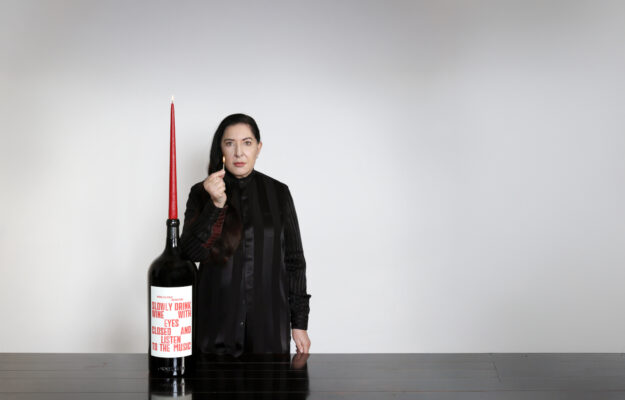
| | | Proceeds totaling $300,000 will be donated in full by Tenute dell’Ornellaia, part of the Frescobaldi Group, to the Guggenheim Foundation to support conservation and restoration programs for the works in the “Guggenheim Pop” exhibition in New York. This is the total proceeds from the “Vendemmia d’Artista 2023” charity auction, No. 18, conducted by Bonhams, which featured Marina Abramović interpreting Ornellaia Vendemmia d’Artista 2023 La Vitalità. | |
|
| | While just a few years ago this practice was branded as heretical by the most orthodox sommeliers, it is now becoming an increasingly widespread trend: red wine can be served chilled in the summer. This is confirmed to WineNews by prestigious sommeliers such as Paolo Porfidio (Excelsior Hotel Gallia): “A glass of Brunello di Montalcino or Barolo is delightful in the summer, served at the right temperature.” Sebastien Ferrara (Enrico Bartolini at Mudec): “It’s no longer a taboo.” Marco Reitano (La Pergola by Heinz Beck): “Our palate craves freshness.” This trend is also supported by winemakers: Riccardo Cotarella says, “I taste red wines between 15 and 17 degrees”; Leonardo Palumbo speaks of “a positive trend”; Mariano Murru points out that “room temperature” is cellar temperature. Wineries are also focusing on reds to be served chilled: Masi, Sìddura, Tormaresca, Braida, among others.
| |
|
| | Despite market challenges, the United Kingdom remains one of the main export destinations for Italian wine worldwide, with exports totaling 816.8 million euros in 2025 and 152.2 million euros in the first quarter of 2026. This is further confirmed by the 2026 “Decanter World Wine Awards” by the UK magazine “Decanter”, which place Italian wine at the very top, with 27 “Platinum” wines out of a total of 196 (second only to France) and 109 gold medals. South Tyrol is in the spotlight, and Cantina Terlano is the standout star, the only winery to have secured five “Platinum” awards.
| |
|
|
|