If this message is not displayed correctly click here |
Issue 785 - May 11th - 15th 2026 - Expressly created for 3699 wine lovers,
professionals and opinion leaders from all over the world | |
|
|
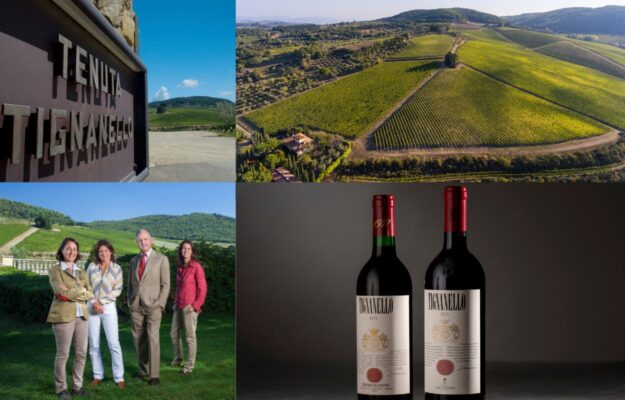
| | | Great names from Bordeaux (Pontet-Canet, Lynch Bages, above all, then Cheval Blanc, Leoville-Las Cases, Montrose and Cos d’Estournel) and Burgundy (Romanée-Conti and La Tache), with two intrusions coming from Australia, with Grange by Penfolds (Treasury Wine Estates), and from Italy, with one of its emblematic wines, Tignanello by Marchesi Antinori produced at the splendid Tenuta Tignanello estate, in the heart of Chianti Classico, and considered one of the milestones of the “renaissance” of Italian wine. This is the “The World’s Most Wanted Wines of 2026”, the list of the most desired wines in the world, according to Wine-Searcher. | |
|
| | The global wine sector continues to undergo a phase of structural transformation. In 2025, the global vineyard area declined for the sixth consecutive year, while production, consumption, and international trade remain under pressure in a context marked by climate change, economic uncertainty, and shifting consumer habits. However, Italy and France remain leaders in production, exports, and consumption (although in the latter case they have been surpassed by the Usa, while Spain retains the primacy of the largest vineyard area: see focus). This was reported in the “Global Wine Market Report” 2025 presented today in Lyon by the International Organization of Vine and Wine (Oiv). Looking at the key figures, according to the latest estimates, the global vineyard area stopped at 7 million hectares, declining by 0.8% compared to 2024. Also global wine production remains at historically low levels. In 2025, it is estimated at 227 million hectoliters, just 0.6% higher than the minimum recorded in 2024. Climatic conditions continue to have a heavy impact on harvests. To this, the choices of some territories to voluntarily reduce production in order to contain surpluses and support the market must be added. On the demand side, global wine consumption is estimated at 208 million hectoliters, with a decrease of -2.7% compared to the previous year. Inflation and the economic slowdown have also weighed heavily, reducing the purchasing power of consumers. Global wine exports fell to 94.8 million hectoliters (-4.7%), while the total value of trade decreased to 33.8 billion euros (-6.7%). Despite the contraction, values remain above pre-pandemic levels. Trade has been held back mainly by the slowdown in global demand, trade tensions, and uncertainties linked to tariff policies, particularly in the U.S. Market. Despite the complex picture, the global wine market appears to be essentially balanced today. For the third consecutive year, global production has remained relatively low, helping to limit stock accumulation. | |
|
| | If in the past the coexistence of woods and vineyards was the norm, the practice of “specialized cultivation” has established recently, leading to the growth, in many areas, of true quasi-monocultural zones. Yet, in the world of wine, the importance of the proximity and synergy between forests and vineyards has been rediscovered, with authoritative contributions, including those of professor Attilio Scienza and landscape architect Paolo Pejrone. A topic which is more central especially in the celebrations of the anniversary No. 190 of Mosnel, one of the oldest and most renowned wineries in Franciacorta, led by the Barzanò family, at the conference “Agroforestry. In search of tomorrow Viticulture”. With many contributions (in depth) which have reiterated the benefits of the forest for the vineyard, including biodiversity, temperatures and grape quality. | |
|
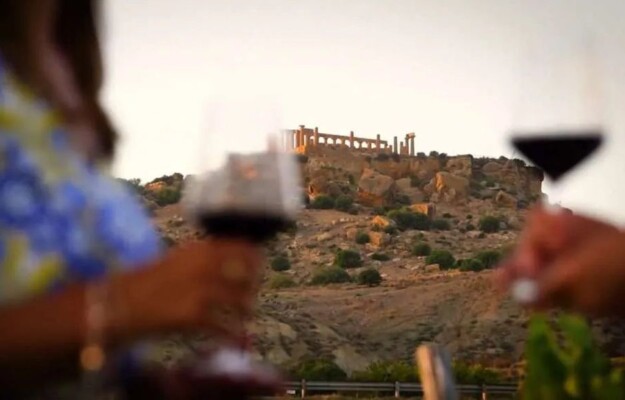
| | | In 2025, 61.4% of Sicilian wineries recorded an increase in visitors, and 74.7% report a predominance of foreign customers, mainly from Europe and the U.S. Wine tourism is becoming an increasingly more concrete and growing economic component for Sicily: for 58.3% of companies, it accounts for around 10% of total turnover and guided tours and tastings are the main commercial drivers for wineries. Sustainability is among the main strengths of Sicilian wine, with 86.7% of wineries now producing energy from renewable sources and 56.2% covering at least 40% of their energy needs. This is a production and wine tourism system which is solid and international, and which can rely on tangible environmental sustainability. It is a market where both demand and supply coexist, including ecological terms: the goal is to monetize and translate the sector into value, meaning stable, long-term economic returns by creating premium experiences and customer loyalty. Artificial Intelligence can help achieve this quickly: it is now used to increase average spending by up to 30%, boost customer loyalty by up to +50% and reduce waste by 30%. This was discussed at the opening conference “Taste the Island, live the story” of “Sicilia en Primeur” 2026 in Palermo in recent days (more in depth). | |
|
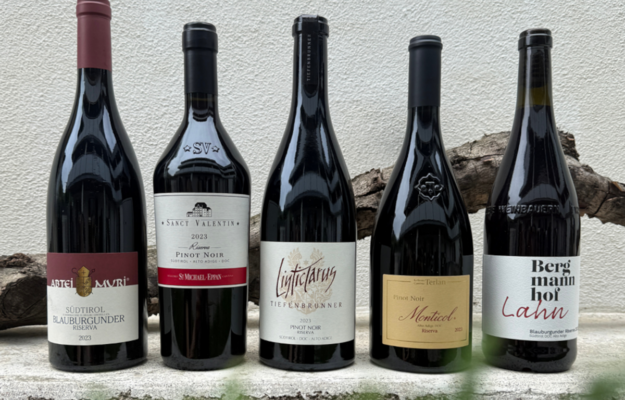
| | | South Tyrol confirms its position as a land of excellence for Pinot Noir: the best Italian expressions of the famous grape (from the 2023 harvest) come from here. Abtei Muri Riserva Pinot Noir by Tenuta Cantina Convento Muri-Gries is No.1 in the “National Pinot Noir Contest” (directed by Ulrich Pedri of the Laimburg Research Centre), ahead of those from South Tyrolean wineries such as San Michele Appiano, Tiefenbrunner - Schlosskellerei Turmhof, Terlano and Bergmannhof. The best of the over 100 competing wines from all over Central and Northern Italy. | |
|
| | In a moment like the current one, when wine looks for and claims its distinct identity as a cultural beverage, its association with art is interesting and increasingly widespread. And increasingly more, today, the liaison between wine and art is evolving into collecting and transforming the winery into a true museum. This is the case of the “Art Ferment” project by the historic Valpolicella brand Farina Wines, where, among other things, a sculpture by Anselm Kiefer, one of the most important artists of our time, dedicated to the poet Paul Celan, is showcased. And that, by inaugurating the exhibition “Transitum Frugum, l’antico patto” by the artist Federico Ferrarini, represented by Kromya Art Gallery, has begun a new course which involves the selection of an artist and a gallery to create site-specific exhibitions and the acquisition of a work by the artist hosted at each edition.
| |
|
| | The trend doesn’t change, and the comparison with 2025, a year in which figures were already high, shows how Italian wineries, in general, are increasing their wine stocks. According to the figures updated on April 30th, 2026 reports a +5.6% increase in wine stocks in cellars compared to a year ago, for a total of 52.5 million hectoliters (almost 2.8 million hectoliters more). To this, 4.7 million hectoliters of musts (+35.8%), must be added. This is according to the latest update of “Cantina Italia” by Icqrf (more in depth). | |
|
|
|