If this message is not displayed correctly click here |
Issue 812 - November 16th - 20th 2026 - Expressly created for 3696 wine lovers,
professionals and opinion leaders from all over the world | |
|
|
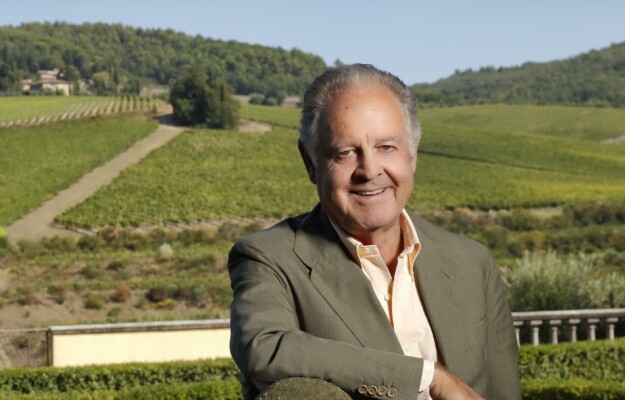
| | | To young producers, “I say that, first and foremost, there is one indispensable thing in our industry: passion. You have to fall in love with this product and this line of work. Without passion, you won’t achieve anything. I would also advise them to be courageous: you have to respect tradition and history while, at the same time, knowing how to innovate. Not reckless courage: we must know the product, the industry, and the market; believe in the project; and throw our hearts over the obstacle”. These are the words of Marquis Piero Antinori, honorary president of Marchesi Antinori, who spoke in Florence at the “Guida Vitae” 2027 event organized by the AIS (Italian Sommelier Association). | |
|
| | Not only did the 2021 Barbaresco Rabaja Riserva from Produttori del Barbaresco, one of Piedmont’s most internationally acclaimed cooperatives, rank No. 2, but so did the 2021 Brunello di Montalcino from Caparzo, one of the “jewels” of the region owned by producer Elisabetta Gnudi Angelini (the “Lady of Wine”, who also owns Altesino, also in Montalcino, as well as the Borgo Scopeto winery in Chianti Classico and Doga delle Clavule in Morellino di Scansano, among others), at No. 4: there are a total of 22 (2 more than in 2025) Italian wines in the prestigious “Top 100” list by “Wine Spectator”, more than half of which are from Tuscany (led by Chianti Classico with 4 wines, while Brunello di Montalcino, Bolgheri, Vino Nobile di Montepulciano, and Toscana IGT each have 2, ed.). Antinori is the “hero of two worlds”, a producer who managed to place no fewer than 3 labels on the list: at No. 6 is his “American” Cabernet Sauvignon Stags Leap District Fay 2023 from Stag’s Leap Wine Cellars, a California wine gem founded by the renowned Warren Winiarski and now owned by Marchesi Antinori; at No. 12 (and the best of the Italian wines “outside the Top 10”) is the Bolgheri Superiore Guado al Tasso 2023 from Tenuta Guado al Tasso; and at No. 53, the Primitivo del Salento Torcicoda 2023 from Tormaresca, the Antinori family’s winery in Puglia. Looking at the ranking of Italian wines (second only to the U.S. in terms of number, with 36 wines, including the No. 1, the 2023 Paul Hobbs Coombsville Cabernet Sauvignon from California, and ahead of France, with 21 labels, with these three countries accounting for 79 out of 100 wines), there are many big names of Italian wine: from Castello di Monsanto to Massolino, from Le Macchiole to Dei, from Casanova di Neri (already No. 1 in 2006 and No. 4 in 2017) to Tenuta di Arceno, from Masottina to Tenuta di Trinoro, from Torre Zambra to Casa Emma, from Tenuta di Bibbiano to Cantina Terlano, from Ratti to the previously mentioned Tormaresca by Antinori, from Poliziano to Nino Negri, from Ornellaia (Frescobaldi) to Tenuta delle Terre Nere, and to Cantina del Pino. This selection of Italian wines by “Wine Spectator” consists overwhelmingly of classic and recognizable names and regions (all the wines and the selection criteria in detail). | |
|
| | After 20 years of growth, the situation facing the Italian wine industry is complex and challenging. Declining consumption, climate change, geopolitical tensions, and communication around the topic of “alcohol and health” that frightens rather than informs. Yet, by the end of 2026, positive signs are beginning to emerge. The wine industry must adopt a proactive stance, invest in value, and simplify its communications in order not to lose young people, who represent the future. It must also revitalize its communications on the topic of “health”, reaffirming that responsible and moderate consumption, as is the Mediterranean way, is “not harmful”. These are the main conclusions of “WIN& - Italian wine culture exhibition” by Consorzio Italia del Vino, which brings together 24 of the most prestigious Italian wine producers, representing over 1.5 billion euros in revenue and 15% of Italian wine exports. | |
|
| | | Official data from some countries is still pending, but according to preliminary estimates from the OIV-the International Organization of Vine and Wine (see in-depth analysis), global wine production in 2026 is expected to be in line with that of 2025, ranging between 220 and 230 million hectoliters. If confirmed, this figure would mark the fourth consecutive year of below-average production, partly due to the effects of climate change and a slowdown in the markets, which have led to the uprooting of tens of thousands of hectares in countries such as France, the United States (led by California), Australia, and others. In particular, explains the OIV (which will update the figures in May 2027, ed.), in 2026 wine production in the Northern Hemisphere followed varying trends, influenced by differing climatic conditions. In Europe, production is estimated at 137 million hectoliters, with a significant recovery in several countries, particularly Spain, Portugal, and Romania. Overall, production in the European Union remains 6% below the average of the past five years. Despite these fluctuations, the ranking of the world’s four largest wine producers remains unchanged: Italy (estimated at 41 million hectoliters), France (36.5), Spain (32.6), and the United States (19). | |
|
| | | Even Brunello di Montalcino, in complex times like these, celebrates a slight decline almost as a success. According to an analysis presented at the launch of “Benvenuto Brunello” 2026 (running through November 23 in Montalcino, featuring tastings of the new vintages) by the UIV Observatory of the Brunello di Montalcino Consortium, based on “various sources” (IWSR, NielsenIQ, SipSource-WSTA, U.S. Census, ed.), 2026 estimates point to retail sales of approximately 750 million euros and 9.3 million bottles sold, representing a 2.7% decline in value and a 3% decline in volume. | |
|
| | Wine is gaining more and more traction on social media and the web. And while major wine brands such as Donnafugata, Banfi, Ca’ del Bosco, Cusumano, Antinori, Frescobaldi, Santa Margherita, and Masi rank at the top in terms of “digital maturity index”, WineNews leads the media category, ahead of major general-interest magazines and other specialized publications. This finding comes from the Wine by Quodigi Observatory (in-depth analysis), an agency specializing in web intelligence and strategic advisory services, based on the performance recorded in August 2026 for 33 brands and various media outlets. Overall, the wine sector’s composite index stands at 65 out of 100. | |
|
| | The best Italian winery in the world, in terms of wine tourism and beyond, is, once again, Ceretto. The Piedmontese winery ranked No. 22 on “The World’s Best Vineyards” 2026 list, unveiled in Santiago, Chile (which also includes G. D. Vajra, Vietti, Ferrari Trento, and Arianna Occhipinti in the top 100, ed.). The list crowned Schloss Johannisberg, in the Rheingau region of Germany, as the world’s No. 1, having already been on the podium in 2025; it will now, therefore, enter the “hall of fame” of “The 50 Best Vineyards” winners. | |
|
|
|